Which motorcycle chain grease to choose in 2026? (Route vs Off-Road / Enduro)

Whether on the road or off-road, the chain of your motorcycle is subjected to a severe test. But beware: the enemy is not the same! On the road, it is the centrifugal force (speed). All-terrain and enduro are land, sand and mud.
The technical trap lies in the formation of a ‘running paste’. If you use a road grease (formulated to be extremely sticky) off-road, it will act as an impurity magnet. By imprisoning the sand, this grease turns into a ruthless abrasive mixture that will literally "sprinkle" your gable teeth and shear your O-rings into a single outlet.
Technical secrecy: Avoid run-in paste (road vs off-road)
Before you buy, understand this:
- Road grease (Road Lube): it is formulated to be very sticky in order not to be ejected at 130 km/h.
Enduro danger: If you put that in the paths, the sand will stick to it. The mixture “Graisse + Sand” creates an abrasive paste that will file your O-rings and crown teeth in record time. - All-terrain grease (Off-Road / Dry Lube): it contains solvents that evaporate to leave a film dry and non-sticky (often Teflon/PTFE-based).
Advantage: the sand does not adhere. The chain stays clean.
Touch your chain 10 minutes after greasing.
- Does it stick to the finger? It is a road fat. Perfect for bitumen, to escape for off-road.
- Is it greasy but dry to the touch? It is an off-road grease. Go into the mud!
Our top 3 best motorcycle chain greases (expert selection)
Products tested in real conditions.
1. WD-40 Specialist Wet conditions (the top Frenduro)
The grease used since 2019 on our personal motorcycles
Be careful, don't confuse it with the classic WD-40 (blue)! Here is the range Specialist Moto. Its formula ‘Wet conditions’ does not stick excessively, which avoids the accumulation of sand while perfectly protecting against rust after washing.
✔☀ Verdict: ideal Enduro/mud/winter.
2. Motul Chain Lube C3 (off-road specialty)
The chemical reference
At Motul, make no mistake about the colour code:
- C2 (Road): very sticky (To avoid in Enduro).
- C3 (Off Road): fluo yellow color. Specific non-sticking formula for sand and earth.
This is the C3 that we recommend here for your earth outings.
✔☀ Verdict: the reference for not clogging his chain kit.
3. Putoline Tech Chain (The Volume)
The economic choice
Excellent “Ceramic” fat (Ceramic Wax). The advantage of wax is that it dries completely. The sand slips on it. With its 500 ml, the spray lasts a long time.
✔☀ Verdict: Excellent quality/quantity/price ratio.
Extended selection: 12 Spray Chain Greases Tested
In addition to our Top 3, here are other validated references. When you choose, check the mention Off Road or “Dry” on the 2025 Motorcycle Chain Grease Guide: Comparative Route vs All-Terrain. Should we use WD-40? Our tests and tips to avoid soiling and rust if you make soil.
Myth WD-40: Can I grease with the Blue spray?
This is the issue that divides bikers. Here is the Freenduro technical answer:
It is a degrippant and a cleaner. It is composed mainly of solvent. It dissolves the old grease (top to clean!) but it evaporates too quickly to sustainably lubricate a moving chain.
It is a real fat. It contains additives (PTFE or Wax) that remain on the chain after evaporation of the solvent. This is the one to be used.
Interview guide: the Golden Rules
NEVER grease or clean your chain with the engine running and a set speed.
A blow of a rag that gets caught in the crown, and your fingers leave with it. Turn the wheel by hand, engine off.
1. Clean before greasing (crucial!)
Greasing a dirty chain is like putting on deodorant without washing: It's useless. You trap the sand under the new grease, which speeds up wear and tear.
- Use a specific brush (C-shaped) and a chain cleaner (or dearomatized oil).
- No petrol or brake cleaner! This dries and destroys the O-rings inside the links.
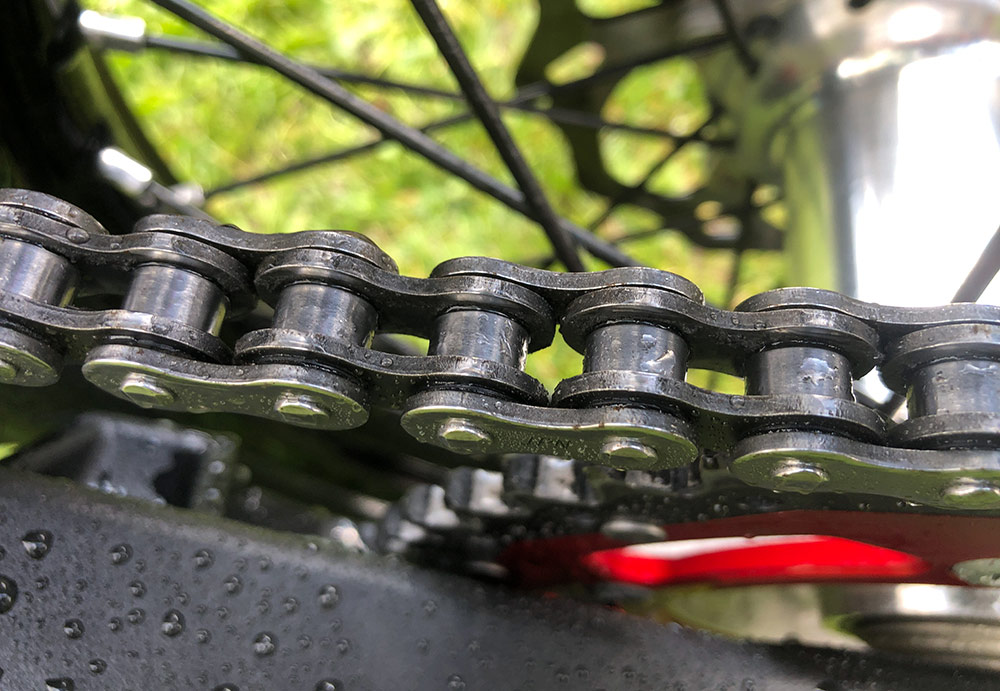
2. The method of not putting it everywhere
- Place a cardboard box behind the chain to protect your wheel and brake disc (the grease on the disc = danger).
- Spray on the inside of the chain (rollers in contact with the crown), not on the outside. The centrifugal force will cause the product to penetrate outwards by rolling.
- Secrecy: Grease in the evening when you return from the walk (hot chain = better penetration) and allow to dry all night long. The solvents evaporate, the grease freezes and will not be thrown onto your pants the next day.

Additional tools
Motorcycle chain cleaners
Brushes for cleaning motorcycle chains







Comments
Leave a comment