The best motocross/enduro stonewalls: the Freenduro Buying Guide
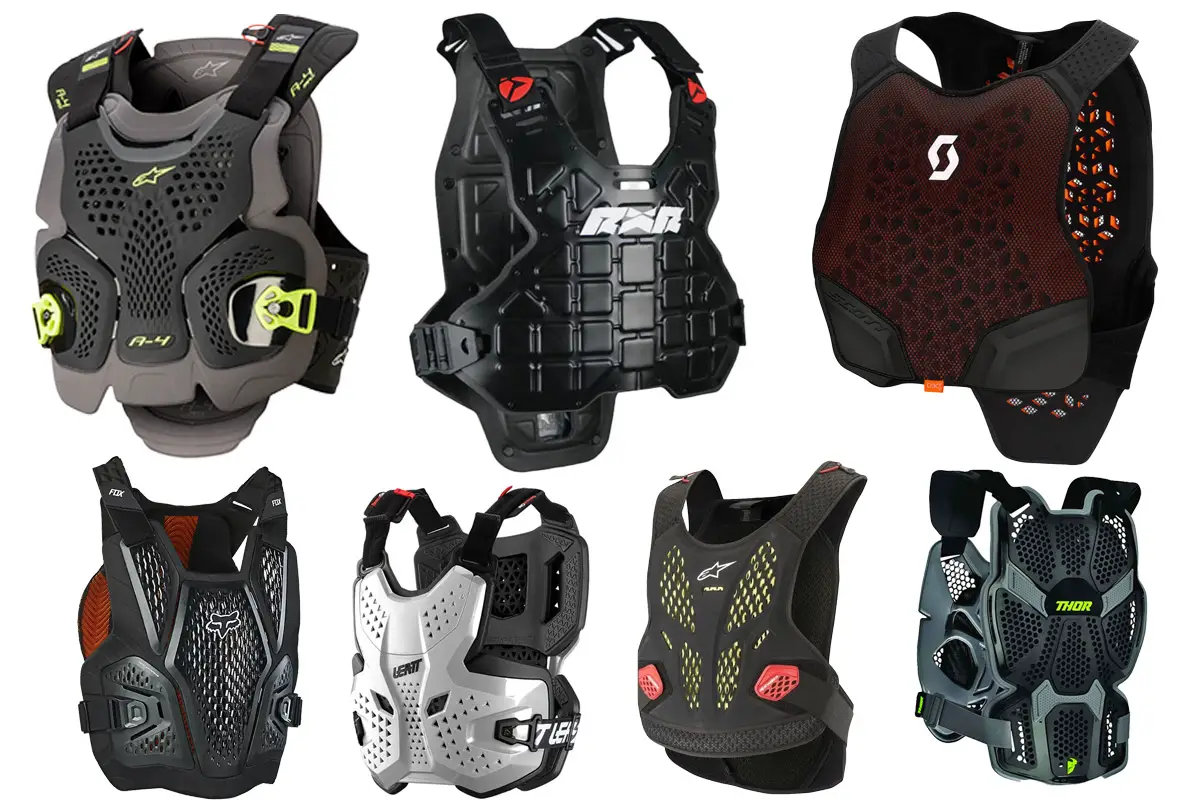
Motorcycle stonewalls have evolved considerably in recent years. In the 1980s, 1990s and even 2000s, it was common for motocross or enduro riders, including professionals, to wear rigid plastrons over their jerseys simply to protect themselves from pebble splashes. Most of these protections, at the time, were made of rigid, basic plastic and offered only very limited protection in the event of a fall.
Today, the stonewalls (or plastrons) have mutated: they are thinner, more ergonomic and above all much more protective for the torso and back. In FFM or FIM competitions, pilots are now required to wear CE-certified back and chest protectors. This evolution of standards and regulations has pushed OEMs to develop state-of-the-art materials. Manufacturers now offer Lighter, more comfortable, better ventilated and with a very good level of protection during shocks.
Our top 3 best motocross / enduro stonewalls in 2026
Top 1: Alpinestars A-4 Plasma stonewall
For Freenduro, the most complete model remains the Alpinestars A-4 (Plasma / Max) protection. It is an essential choice for those seeking overall protection (back, chest, ribs, shoulders) combined with great anatomical comfort thanks to its foams and thermoformed structure. Its thin perforated plates provide effective structural protection while leaving excellent freedom of movement on the bike. The fast-loop elastic closure system allows the equipment to be quickly adjusted to all morphologies, with excellent lateral protection on the pilot’s flanks.

Top 2: Raven Soft Shield vest: an unbeatable protection/price ratio
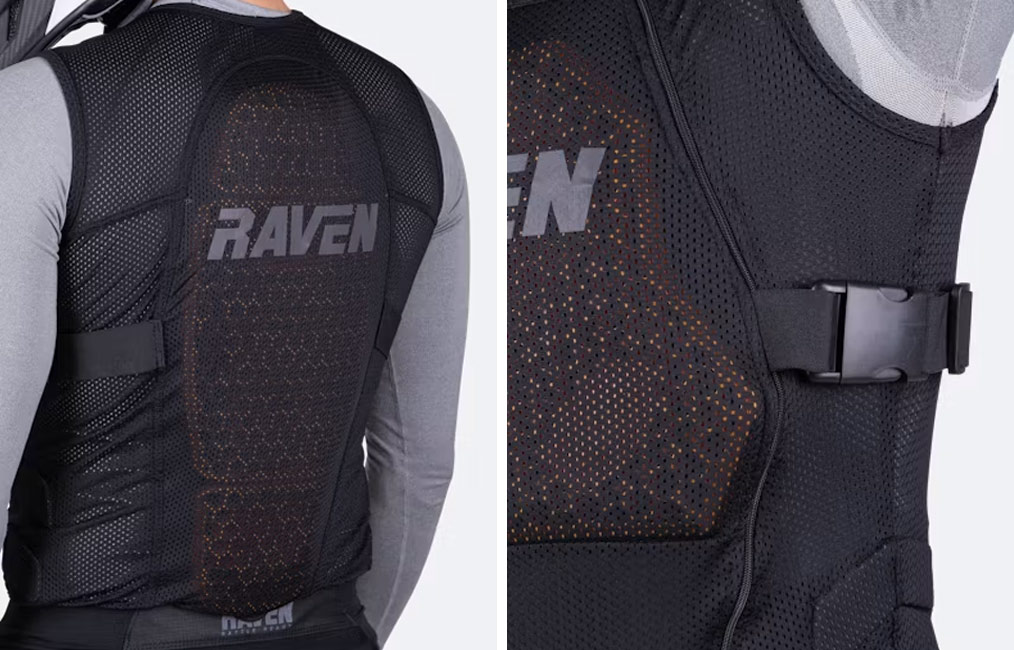
The Raven Soft Shield (the brand developed by 24MX) is an amazing proposal that shakes up the market thanks to an exceptional value for money. Designed as a sleeveless vest with a breathable Lycra mesh structure, it fits close to the body like a technical underwear. Although the seller's product sheet sometimes displays erroneous standards for the chest, it actually offers a Level 1 pectoral protection level, but above all a Level 2 Certified Back Protection, This is very rare at this rate. It is an excellent choice for endurists who want the comfort of the soft and protection that does not move while rolling, without breaking the bank. It remains to be seen the long-term life of the Lycra mesh vest in front of the external elements.
Top 3: Leatt ReaFlex Chest Protector
To replace older generations of flexible laminates such as Scott Softcon Air, the Leatt ReaFlex is the high-end reference. Designed around the ReaFlex reactive gel developed by Leatt, this stonewall remains ultra-flexible when rolling and stiffens instantly under impact. It offers CE-certified level 1 protection for the chest and back while guaranteeing an ultra-discreet profile under the jersey and maximum ventilation. It is the perfect choice for pilots looking for lightness, ease of piloting and flexibility of movement without sacrificing safety.
Other quality stone walls (Alternative according to your needs)
This section presents other very interesting stonewalls in addition to the top 3 of the editorial board. Depending on your budget, morphology or riding style, these options deserve your full attention, without ever sacrificing safety.
The alternative “High-range security”: RXR R-Pro Stonewall
Made in France, this high-end vest offers exceptional safety performance. The RXR R-Pro is one of the only laminates on the market to be approved at level 2 both at the front (EN 1621-3) and at the rear (EN 1621-2). It uses the exclusive Air Shock Absorber (RXR) technology, offering a shock absorbing capacity close to that of an airbag, while being deformable. This is the pinnacle of protection, even if its price (around €249) reserves it for those who have a significant budget for their safety.

The alternative “Lightweight rigid hull”: Leatt 3.5 stonewall
Displaying only 750 g on the scale, the Leatt Chest Protector 3.5 is a CE-certified hard shell protector (doubled with soft impact foam). It is an ideal solution for pilots who are looking for a thin, very light, well ventilated and easy to put on under or on the jersey, while keeping the reassuring side of a plastic shell (especially when faced with projections of large stones).
The alternative “D3O”: Fox Raceframe Impact SB D3O
The Fox Raceframe Impact SB D3O focuses on lightness and ventilation. It has an EN 1621-2 Level 1 certified backbone made of D3O reactive foam, combined with a rigid articulated chest protection (EN 1621-3 Level 1). Its Velcro adjustable straps on the shoulders and flanks guarantee a very precise maintenance of the protection against the body, without hindering movements in action.
The “small budget” alternative: Acerbis P035 L1 stonewall
It is the perfect solution for tight-budget pilots looking for simple and efficient equipment. The Acerbis P035 L1 is an ultra-compact and very lightweight rigid-hulled plastron designed to fit easily under the jersey. Despite its very accessible price, it scrupulously complies with the safety requirements with a dual CE Level 1 homologation (EN 1621-2 for the back and EN 1621-3 for the thorax). An excellent option to ride protected at a low price.
The alternative “Maximum coverage”: Thor Sentinel Pro Stonewall
Successor of the famous Thor Sentinel, the Pro version brings a significant gain in comfort and protection. It combines very airy rigid shells with more enveloping inner foams. Its back protection has been extended compared to the previous model to better cover the lumbar. CE-certified level 1 for chest and back, it offers good motocross and enduro versatility for those who like to feel well "wrapped" in their equipment.
The ‘Gilet Integral’ alternative: Fox Titan Sport Protective Vest
If the classic stonewall or sleeveless plastron format is not enough for you and you are looking for total protection of the upper body in a single garment, the full vest is the solution. The Fox Titan Sport is a must in this field. Designed on a breathable and stretch mesh base, it incorporates a dorsal (Level 1) and articulated pectoral protection (Level 1), but it mainly adds approved shells for the shoulders and elbows. This is the equipment preferred by many extreme enduro or trail drivers, as it ensures that all protections remain perfectly in place in the event of a big fall.
The criteria for choosing a stonewall
1. EC type-approval: Level 1 or Level 2
It is essential to check the CE certifications before your purchase:
- EN 1621-2 for back protection,
- EN 1621-3 for chest protection (chest).
Choose a certified model Level 2 for better absorption of major shocks (usually thicker or using advanced technologies such as RXR). The Level 1 is, however, the current excellent compromise between weight, flexibility, breakdown and budget.
2. Absorption of shocks and materials
Flexible technologies (D3O, ReaFlex gel, dense foams) adapt to morphology and instantly harden at impact, providing great comfort. Rigid plastic shells protect more against direct perforations (pointed branches, large pebbles).
3. Ventilation and ventilation
A good stone barrier must allow efficient air circulation to avoid overheating. Check for perforations and breathable tissue on the torso and back, a crucial point for summer rolls.
4. Adjustment and size
Whether you wear it underneath or on the jersey, your plastron should be perfectly adjusted. Too large, it risks moving during a fall and losing its effectiveness; too small, it will hinder your breathing. Choose adjustment straps on the shoulders and flanks.
5. Where to buy a good stonewall?
Many online retailers and specialty stores offer a wide range of protections. For example, you can consult the available models and buy a motocross stonewall at Mx Flag, which has a varied catalogue adapted to enduro and cross-country requirements.
Reminder on standards of protection
Back protection: standard EN 1621-2
Back protectors for riders must comply with standard EN 1621-2, divided into two levels of performance:
- Level 1: The average residual force shall be less than 18 kN (with a maximum permissible impact peak at 24 kN).
- Level 2: The average residual force shall be less than 9 kN (with a maximum permissible impact peak at 12 kN).
| Back certification level EN 1621-2 | Average residual energy | Maximum accepted peak |
| Level 1 | ≤ 18 kN | ≤ 24 kN |
| Level 2 | ≤ 9 kN | ≤ 12 kN |
The protections of Level 2 therefore absorb and dissipate impact energy much better than Level 1 energy.
Chest protection: standard EN 1621-3
The chest protectors comply with standard EN 1621-3:
- Level 1: Average residual force less than 20 kN (max peak tolerated at 35 kN).
- Level 2: Average residual force less than 20 kN (max peak tolerated at 25 kN with better impact distribution).
| Certification level EN 1621-3 | Average residual energy | Maximum accepted peak | Impact distribution |
| Level 1 | ≤ 20 kN | ≤ 35 kN | ≤ 15 % |
| Level 2 | ≤ 20 kN | ≤ 25 kN | ≤ 30 % |
EC standard EN 14021: That standard (known as the ‘stone barrier’) attests only to resistance against rock or rockfall projections, but does not define impact absorption requirements in the event of a sudden fall.
Alternatives to the stone barrier: the Full Vest
If the stonewall format is not enough for you and you are looking for total protection of the upper body in a single garment, the Full Protective Vest is the solution.
Example: the Fox Titan Sport Protective Vest
The Fox Titan Sport is a must in this field. Designed on a breathable mesh base, it incorporates a dorsal (Level 1), articulated pectoral protection (Level 1), but also shells for the shoulders and elbows. This is the equipment preferred by many extreme enduro or trail drivers, as it ensures that all protections remain perfectly in place in the event of a big fall.
To complete your protective equipment and drive safely, do not hesitate to consult our guide to buying best enduro helmets, as well as our comparison dedicated to Best Off-Road Boots.








Comments
Leave a comment