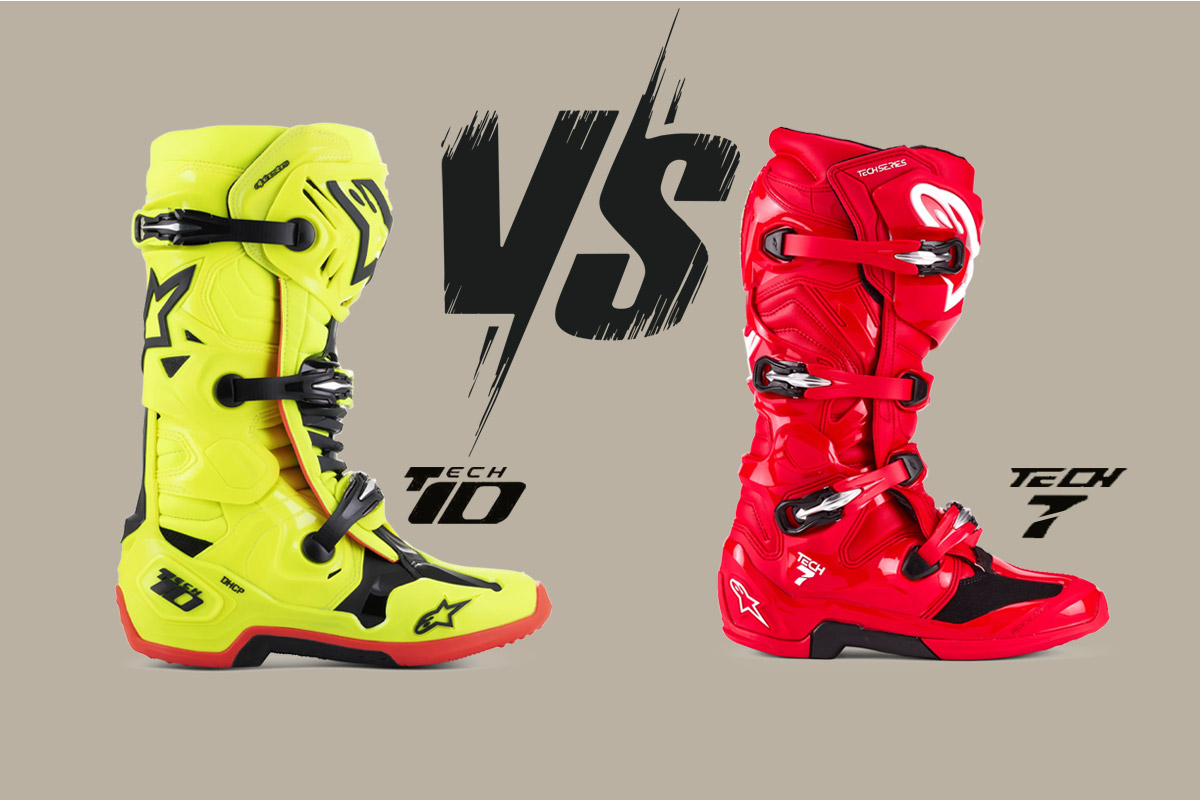
Duel Alpinestars Tech 7 vs Tech 10 boots: Which boots to choose in 2026?
It is the eternal debate that drives the runners’ parks: Is it necessary to fall for the absolute technology of the boots Tech 10 or stay on the legendary versatility of Tech 7 ? At Freenduro, we have analysed the latest models to give you this comparison without wooden tongue.
To help you make your choice, we have summarised the main part of our test below. Here is what you need to remember to identify in the blink of an eye which boot is made for your level and practice.
The Freenduro Summary
- Tech 7 is the ideal boot for 90% pilots. It is light, immediately comfortable and offers the perfect Enduro feeling.
- The Tech 10 is reserved for the 10% remaining. High-level competitors 100% MX /enduro, which drives hard, or pilots with fragile ankles looking for an integral "armor".
The duel of icons at the best price


1. Design and protection: two philosophies of security
Alpinestars Tech 10: the Articulated Fortress
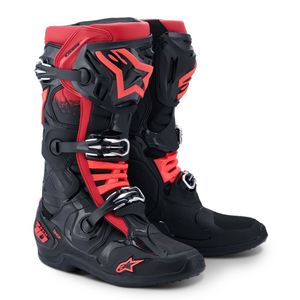
Tech 10 is the technological jewel of the brand. Its protection rests on its inner shoe. It is a real exoskeleton that locks the ankle and limits twists. On the security side, the Tech 10 is simply the top of the Alpinestars pyramid. Tailored to the brutal demands of competition, it is distinguished by its internal shoe that locks the joint while depleting shock absorption. Its dual-pivot arms offer this subtle blend of lateral flexibility and rigorous stability, while the Frontal Flex Frame acts as a real shock absorber for your feet, handling violent compressions and high-speed jump receptions.

Alpinestars Tech 7: freedom of movement
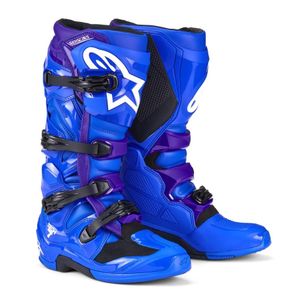
Tech 7 ignores the shoe for a system of Integrated Biomechanical Pivot. It offers excellent protection, but privileges finesse. Without a shoe, the foot is closer to the hull: you have much finer control over the selector and brake pedal, a crucial point in technical enduro. The Tech 7, while offering strong protection, favors a more traditional structure. It is also endowed with reinforced TPU plates on the tibia and calf. Less complex and rigid than the Tech 10, it nevertheless offers most pilots ample support and impact resistance.
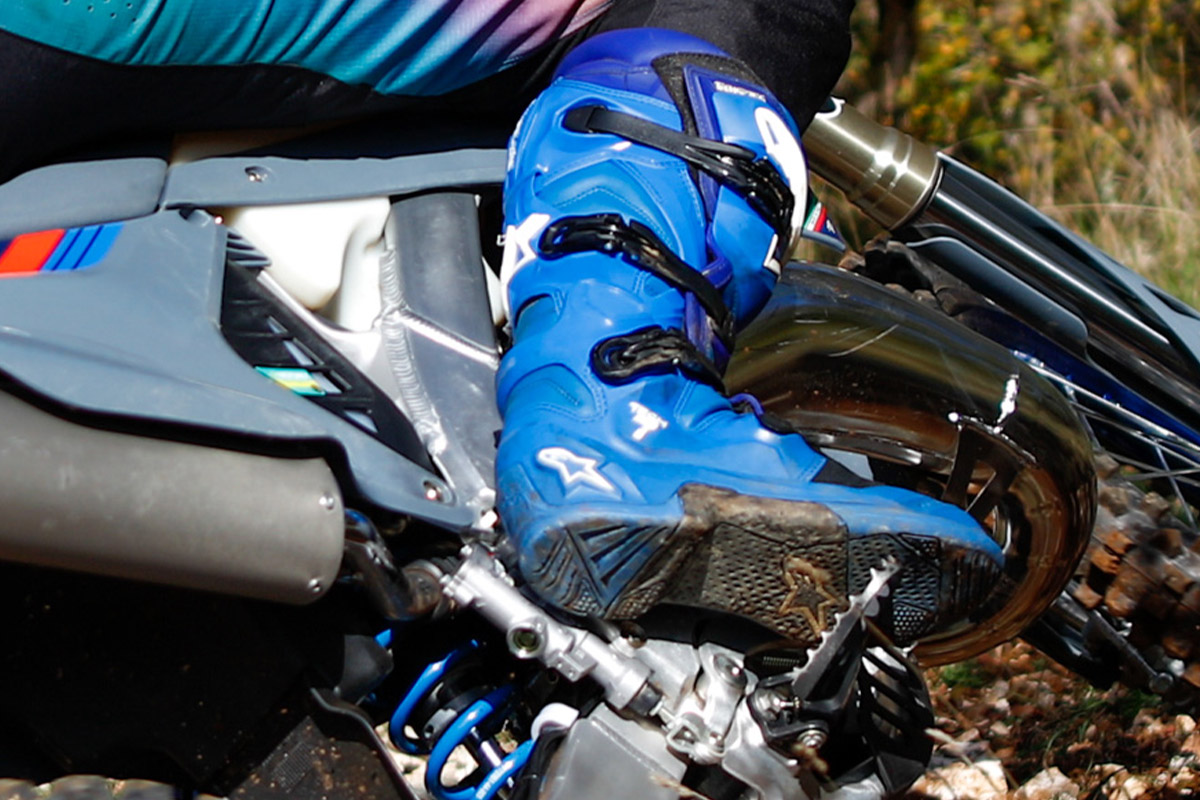
The technical corner: What is TPU?
The TPU (Polyurethane Thermoplastic) is the king material in the manufacture of modern off-road boots. It is an elastomer that combines the elastic properties of rubber with the rigidity of technical plastics.
- Impact resistance: TPU parts absorb and dissipate energy from shocks without breaking.
- Abrasion resistance: The TPU supports repeated rubbing against the frame or floor.
- Flexibility: Unlike standard plastic, the TPU does not become brittle with the cold and retains the flexibility necessary for the rider's movements.
2. Comfort and feeling: the reality on the ground
Although the comfort of motocross/enduro boots is a relatively subjective parameter, there are notable differences between Tech 7 and Tech 10:
- Run-in: Tech 7 is “Ready to Race” right out of the box, no need for running-in time to feel comfortable. Tech 10 is more demanding: count 4 to 5 hours of driving intensive before it softens. It offers a precise fit thanks to its integrated slipper and we appreciate its maintenance and stability once it's run-in.
3. Weight and footprint: the Fatigue Factor
The Tech 7 has about 1.6 kg, against 2.1 kg for the Tech 10.
Tech 10 technology comes at a price: his weight. With about 2 kg per boot (4 kg per pair), it cannot be said to be a feather weight. However, this mass is justified by an extraordinary level of protection and durability. Fortunately, the latest developments have made it possible to refine its profile (of the foot), making the Tech 10 much less massive than the older generations.
Conversely, the Tech 7 is significantly lighter and less bulky, a strong argument that hikers and crossing enthusiasts particularly appreciate. Less weight means less fatigue, especially during long days standing on the underfoot or in the technique where agility reigns supreme. This finesse also facilitates movement, especially during sitting/standing transitions or to overcome obstacles on the fly.
In summary: If you are lining up the kilometres or looking to save your energy rather than wearing full armor, the lightness of the Tech 7 is a strong argument.
See below the idfferences between Tech 10 and Tech 7


4. Water resistance and drying
Tech 10 offers a good barrier at the start, but because of the slipper: once saturated, it retains water and its weight rises. Its materials, optimised for ventilation and impacts, do not facilitate the evacuation of liquids. Once wet, the complete drying of the Tech 10 is relatively long.
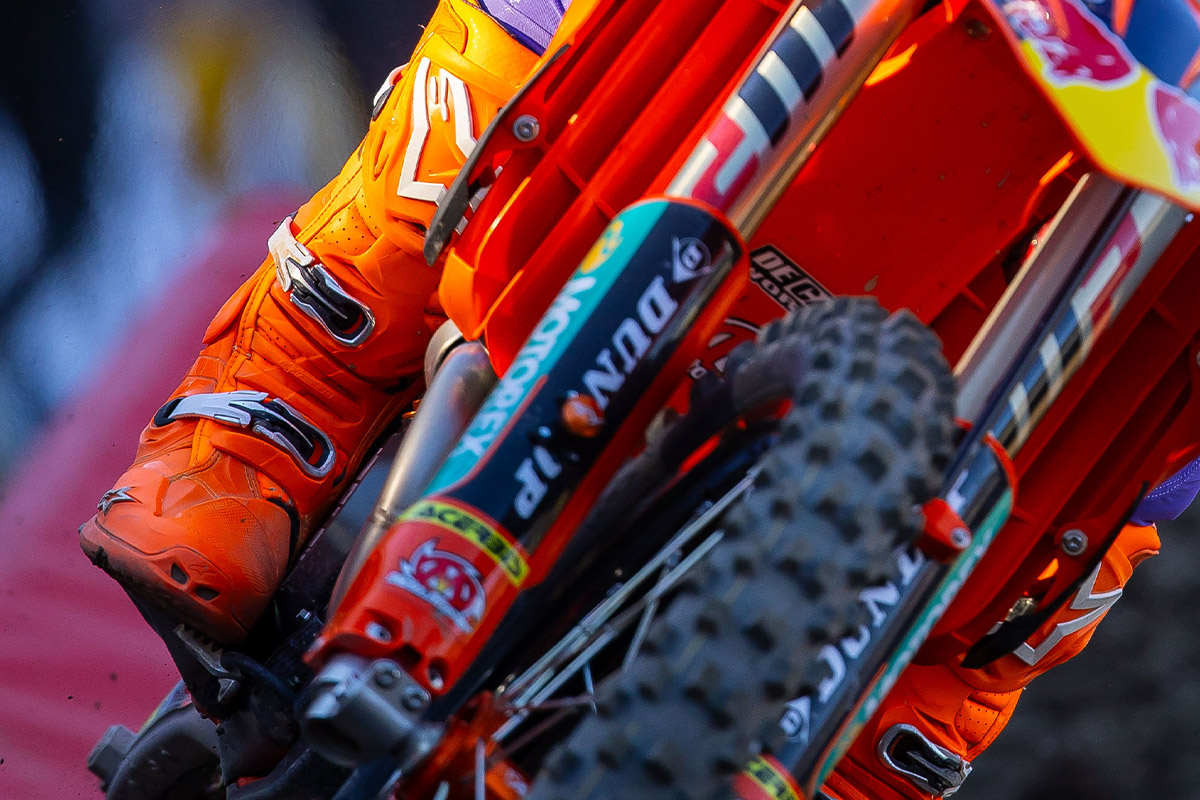
On this ground, Tech 7 takes the advantage. Even without a waterproof membrane, it remains lighter in rainy weather. It does not gorge itself with water and does not become a ball at the end of your legs. Its rapid drying is a valuable asset for endurists who follow several consecutive days of rolling. If your outing promises to be wet, Tech 7 is clearly the most effective.
“For those who want the agility of the Tech 7 with real tightness, turn to the version Drystar, the only one capable of keeping your feet dry during an entire classic.”
5. Solidity and sustainability
Both models are designed for long-term use, but their strength differs depending on the intensity of use.
The Tech 10 is the most robust, almost indestructible model, of the range. It is developed to maintain its structural rigidity despite intensive use for years. Its service life is extended by the possibility of replacing many components: buckles, straps, footrest inserts and soles.
The Tech 7 offers high durability for its price segment. It uses resistant materials and shares several wear parts with Tech 10, including the soles and replaceable buckles. However, as its structure is less rigid than that of the Tech 10, it may show earlier signs of wear in case of daily or very intensive professional use. It is often observed that, after a few seasons, the Tech 7 tends to lose its initial hold.
In summary:
- Tech 10: recommended for high-level competitive pilots or for intensive use.
- Tech 7: Suitable for regular use, but for engaged rides and leisure outings.



6. The variations: choose according to his practice
Alpinestars has developed its models to meet each specific need:
- Tech 7 Enduro: the absolute reference. Its stud sole provides the grip needed to push the bike into the fat.
- Tech 7 Drystar: the only version 100% waterproof. The deadly weapon for the winter, but it keeps the summer warm.
- Tech 10 Enduro: the ultimate protection version, finally equipped with a toothed sole with a flatter, enduro-specific profile.
- Tech 10 Supervented: the ‘clim’ for your feet, ideal for intensive outings under the heat or the SX in the middle of August.

7. The Simulator: Which boot is right for you?
| Your profile | Favourite land | The Freenduro Choice |
|---|---|---|
| Recreational Endurist / Rando | Trails, wood | Tech 7 (Comfort) |
| Motocross driver / Supercross / high level enduro | Circuits, jumps | Tech 10 (Security) |
| Driver in enduro/hard enduro/extreme competition | Pierriers, portage | Tech 7 (Light) |
| Fragile Horses / Injured | Everywhere | Tech 10 (Maintenance) |
9. Maintenance: How to save your investment?
- The slipper (Tech 10): take it out after every exit. Wash it apart to avoid odors.
- Washing: soft brush and warm water. Never pass the Kärcher inside the Tech 7 Drystar.
- Wear witness: monitor the red indicator on the sole. As soon as it appears, change the central insert!
FAQ: Your most frequently asked questions
What is the major difference between Tech 10 and Tech 7?
The Tech 10 has an articulated inner shoe for maximum protection, while the Tech 7 is lighter and without a shoe for a better feeling.
Is the Tech 7 enough for motocross?
Yes, but for high-level competition or big jumps, the Tech 10 offers superior support.
Do we need a break-in time?
Tech 10 takes 4-5 hours to get done. The Tech 7 is comfortable from the first minute (even more so on the post-2025 model).
What size to order?
They cut “true”. The Tech 10 is tighter because of the slipper: If you have a wide foot, choose Tech 7.
The best offers of the moment on Alpinestars Tech 7 and Tech 10 boots
Transparency note: This Freenduro article is completely independent of the brands and products mentioned. It contains affiliate links (if you buy through our links, we get a small commission at no extra cost to you), which allows us to finance the purchase of material for our tests, but does not influence our field-based opinions.
🚀 The evolution of Tech 7 and Tech 10 (End 2024)
Attention, a major change took place at the end of 2025. Tech 7 has made radical progress to become even more efficient: lighter, stronger and more protective than the older generation. This new version reduces the technical gap with the Tech 10 while maintaining its legendary comfort.
⁇ Find out all the details here: New Alpinestars Tech 7 boots: details of developments.
Note: The models presented in our comparators below incorporate these latest developments 2025/2026.




Comments
Leave a comment