Enduro motorcycle protective vests: Buying Guide 2026

Falling is one of the risks inherent in motorcycling, whether it is enduro, motocross or everyday use. Hence the importance of equipping yourself properly. For this purpose, the protective vest is central to the pilot’s equipment: it protects the torso, back, shoulders... vital areas in case of fall or shock.
Whether you are a beginner or experienced, choosing your vest is riding with confidence. Comfort, freedom of movement, level of protection, price... this guide helps you find the most suitable model for your practice.
Essential in cross, enduro, quad or trial, the vest allows you to protect yourself effectively against impacts and projections, covering the most exposed parts of the upper body.
Transparency note: This article is completely independent of the brands and products mentioned. It contains affiliate links (if you buy through our links, we get a small commission at no extra cost to you), which allows us to finance the purchase of material for our tests, but does not influence our field-based opinions.
Why choose a “special enduro” vest rather than a cross stone guard?
One does not choose one’s enduro vest as a crossstone. Here are the 3 specific constraints that we validate during our tests:
- Duration of carriage: An enduro trip lasts 4 to 7 hours. The vest should be forgotten to avoid unnecessary fatigue.
- Hydration: The backbone shall be compatible with the wearing of a water bag (Camelbak) without creating a compression point.
- Thermoregulation: In slow technical passages, the vest must ventilate as much as possible to avoid “heat stroke”.
Our TOP 3 of the best enduro protective vests
1 – Zandona Netcube Jacket – Full protection Level 2
It is the only vest to offer level 2 protection everywhere. This is our absolute reference for competition and crossing.
2 – Scott Softcon Air – Reference in ventilation
Thanks to the revolutionary D3O, it offers incredible flexibility and lets the air through like no other model.
3- Alpinestars Bionic Plus V2 – The unbeatable price/quality ratio
A lightweight, reliable and protective vest by Alpinestars for tight budgets that don't want to sacrifice safety.
Our evaluation criteria (protection / price / comfort / standards)
1. Level of protection: Each vest has been assessed according to the standards it meets for the different areas of the body: Thorax : standard EN 1621-3 / Back : standard EN 1621-2 / Elbows and shoulders : standard EN 1621-1
The protections of level 2, which outperformed level 1, were valued in the final score.
2. Price/quality ratio: We compared the level of protection offered with the selling price. This makes it possible to identify the models that offer the best security without blowing up the budget.
3. Comfort: Vests with soft pads got a bonus, as they are often more comfortable to wear than those with hard shells – a real plus for long rides.
4. Up-to-date standards: Models conforming to the latest standards (EN 1621-2 and EN 1621-3) were rated higher. Conversely, only certified chest protectors EN 14021 (2003) They have been penalised because they are less adapted to current standards.
The Top 10 detailed best enduro protective vests
This detailed ranking is designed to help you choose a motorcycle protective vest that best suits your needs and priorities between safety, budget or a compromise between the two.
1 : ZANDONA Netcube vest: the most protective and comfortable
Zandona offers a one-size-fits-all system for its vests. The choice is made in two stages:
Step 1 (your size): Choose the reference X6 if you are measuring (1.60-1.69 m), X7 (1.70-1.79 m) or X8 (1.80-1.90 m).
Step 2 (Size profile): Once the height has been validated, select your size (XS: 70-77 cm / S: 78-85 cm / M: 86-93 cm / L: 94-101 cm / XL: 102-114 cm).
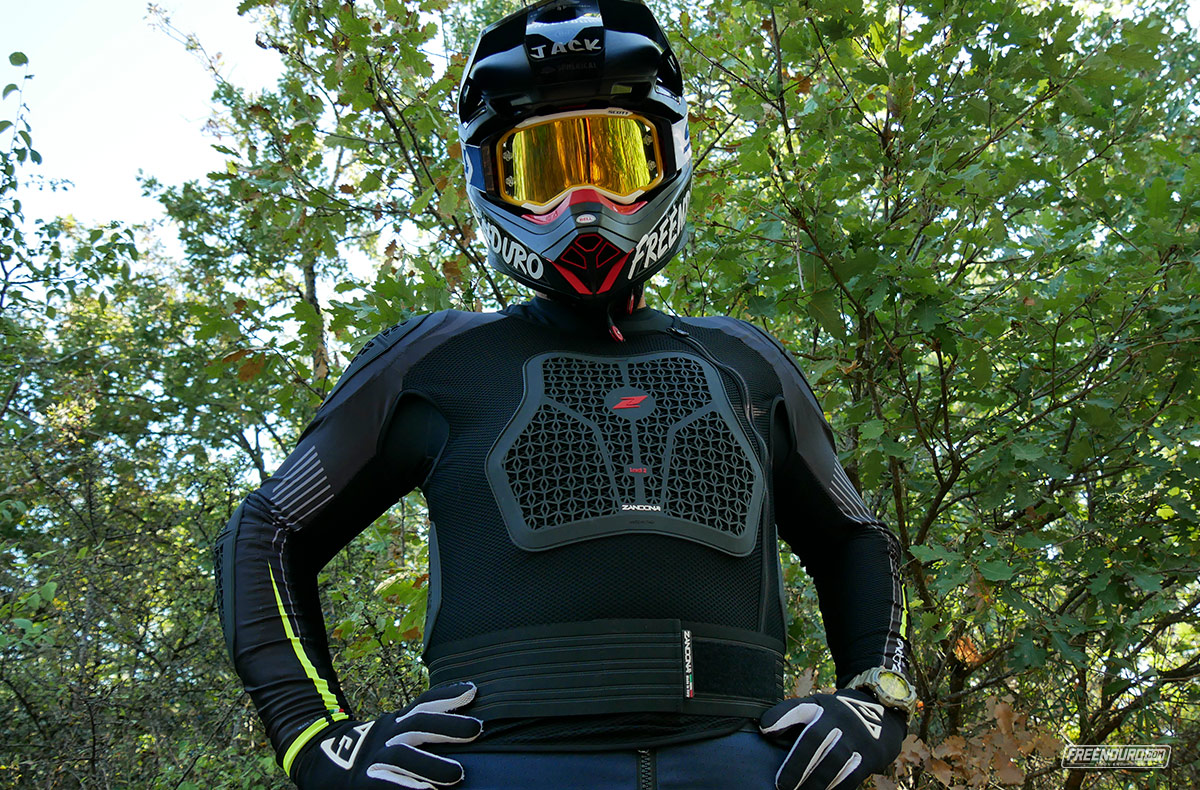
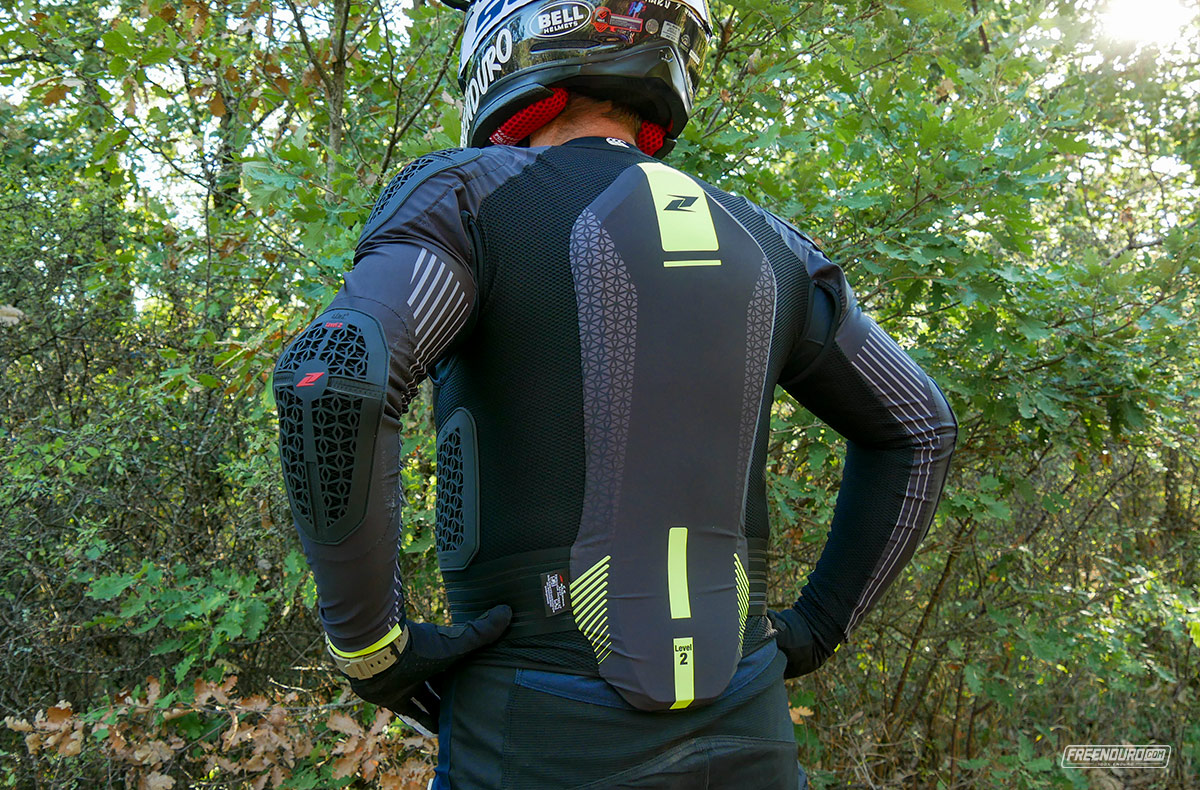

See the complete test of this vest by Freenduro
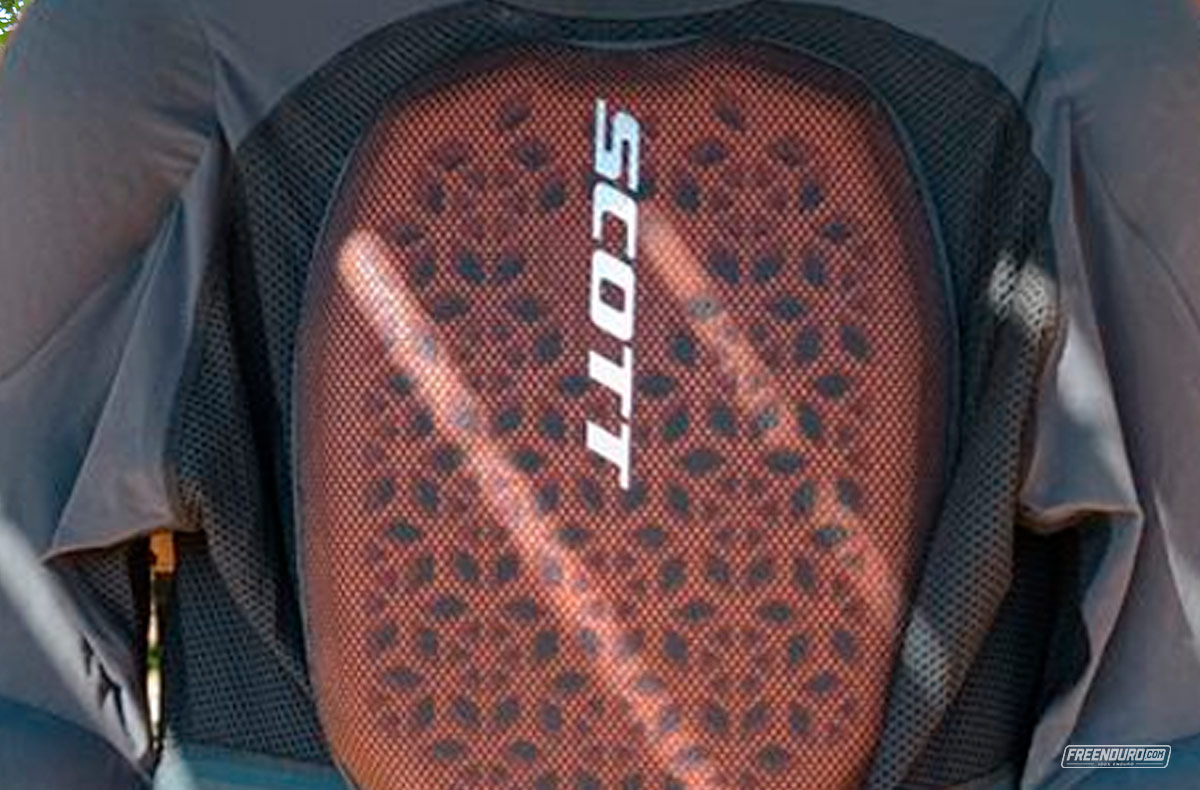
2 : SCOTT Softcon Air vest: the Challenger
The Freenduro opinion: The King of Ventilation! Its honeycomb D3O plates let air through like no other vest. This is the best way to avoid overheating in the technique.
Bold: The pectoral protection is a little short vertically, it can leave the lower belly exposed in pilots over 1m85.
3 : Vest ALPINESTARS Bionic plus V2
The Freenduro opinion: An excellent intermediate choice. We appreciate the lightness of the mesh that is forgotten but a little less the rigid protections but after that it does the job too. Its price content allows it to join our top3.
Bold: The pectoral protection is a bit thin compared to Leatt’s “big impact” models.
4 : LEATT 3DF Airfit EVO vest: almost perfect (except price)
The Freenduro opinion: The market reference for years by a biker safety specialist (LEATT). The 3DF foam is ultra comfortable and ventilates well.
Bold: The price is high and the fabric is a little fragile at the seams after several washes.
5 : Vest LEATT 4.5 EVO
The Freenduro opinion: It’s tough! Ideal if you fall often or for very stony terrain thanks to its rigid shells over the foam.
Bold: It's heavier and heavier than the LEATT's 3DF series, you can feel it more on long rides.
6 : Vest FOX Baseframe Pro D3O
The Freenduro opinion: The comfort of the D3O at Fox is royal, it molds perfectly to the body with heat.
Bold: Synthetic fabric absorbs sweat a lot, it quickly becomes moist and requires frequent washing.
7 : Alpinestars Bionic Pro V3 Plasma Vest
The Freenduro opinion: Alpinestars’ new Plasma technology is very flexible and environmentally friendly. A very good modern vest.
Bold: The cut is very tight (“Slim fit”), be careful if you have a strong template, it can tighten. Dommange that the pectoral protection is only level1, otherwise it could integrate our top 3
8 : SHOT Optimal 2 Vest
The Freenduro opinion: The price is unbeatable to equip without breaking the bank. Do the job to get started.
Bold: It is a basic protection (simple foam and plastic), much less ventilated and ergonomic than the high-end.
9 : FOX Titan Sport Vest
The Freenduro opinion: The classic old-fashioned ‘Robocop’. Incredible and reassuring integral protection.
Bold: It is an old, rigid and warm design. We've done a lot better in comfort since then.
10 : KENNY Performance + Vest
The Freenduro opinion: An affordable French alternative that offers proper protection for the hike.
Bold: The finishes (zip, seams) are a notch below the Leatt or Scott standards, attention to durability.
Summary table of the best protective vests for enduro
| Ranking | Name | Pectoral protection | Back protection | Elbow and shoulder protection | Public price (€) | Note (/10) |
| 1 | Zandona Netcube Jacket | EN 1621-3 level 2 | EN 1621-2 level 2 | EN 1621-2 level 2 | 260.99 | 10.0 |
| 2 | Scott Softcon Air | EN 1621-3 level 2 | EN 1621-2 level 2 | EN 1621-1 Level 1 | 274.90 | 9.3 |
| 3 | Leatt Protector 3DF AirFit EVO | EN 1621-3 level 2 | EN 1621-2 level 2 | EN 1621-1 Level 1 | 329.95 | 9.3 |
| 4 | Alpinestars Bionic Plus V2 | EN 1621-3 level 2 | EN 1621-2 level 2 | EN 1621-1 Level 1 | 214.95 | 8.6 |
| 5 | Leatt 4.5 EVO | EN 1621-3 level 2 | EN 1621-2 level 2 | EN 1621-1 Level 1 | 329.95 | 8.6 |
| 6 | Fox Baseframe Pro D3O | EN 1621-1 Level 1 | EN 1621-2 level 2 | EN 1621-1 Level 1 | 215.00 | 7.9 |
| 7 | Alpinestars Bionic Pro V3 Plasma | EN 1621-3 Level 1 | EN 1621-2 level 2 | EN 1621-1 level 2 | 259.95 | 7.9 |
| 8 | Shot Optimal | EN 14021
| EN 1621-2 level 1 | EN 1621-1 Level 1 | 119.99 | 5.7 |
| 9 | Fox Titan Sport | EN 1621-3 Level 1 | EN 1621-2 Level 1 | EN 1621-1 Level 1 | 150.00 | 5.7 |
| 10 | Kenny Performance+ | EN 14021 | EN 1621-2 Level 1 | EN 1621-1 Level 1 | 129.95 | 5.0 |
Vests with rigid protections versus vests with soft protections
In recent years, the Rigid protections are gradually replaced by flexible protections in the motorcyclist's protective equipment. This development can be explained by several factors. Motorcycle riders are looking above all for comfortable and flexible equipment, especially during long driving sessions. Rigid protective vests, although effective shock absorbing equipment, are often heavy, cumbersome and limit mobility. On the other hand, the soft protective vests offer great freedom of movement on the bike and increased comfort, while being equally effective in the face of shocks.
Modern materials play a key role in this transition. The D3O, used by trade marks such as Scott (Softcon Air) and Fox (Baseframe Pro D3O), remains flexible at rest, but hardens instantly during a shock, providing excellent impact absorption. At Leatt, the 3DF Foam, present in the Protector 3DF AirFit EVO, combines lightness, optimal ventilation and the ability to absorb shocks effectively. Zandona, with its Netcube Jacket X6 uses a perforated PU foam that provides excellent ventilation while adapting perfectly to the body. Finally, Alpinestars bet on hybrid technologies with flexible zones in Bio-Foam, as in the Bionic Plus V2, to combine comfort and robustness.

These modern materials meet current safety standards, like the EN 1621-2 and EN 1621-3, which ensure optimal shock absorption while promoting more comfortable solutions. Thus, models such as the Scott Softcon Air vest, the Leatt Protector 3DF AirFit EVO vest or the Zandona Netcube Jacket X6 perfectly illustrate this evolution. They combine protection, comfort and innovation, meeting the expectations of the most demanding motorcycle riders.
How do you know if your protective vest is properly approved?

On the inner label of your vest (regardless of the model and type), you must find a small pictogram of the rider in a square and mention the standards it complies with (EN xxxxxx). This certifies that your protection is intended for the practice of motorcycles and allows you to protect yourself at the level of the NF/CE homologation standard.
If you want FFM-labelled protection (which is not mandatory, as it is the EC standard that guarantees the level of protection and not the French Motorcycle Federation) you must find, in addition to the EN xxxxxx marking, a small red label with the words "FFM equipment".
As a reminder, in enduro competitions (Championnat de France or Classics), the FFM regulation imposes back protection in accordance with the standard EN 1621-2 (Level 1 or 2) and pectoral protection EN 1621-3.
Summary table of motorcycle protective vest standards
This table compiles the applicable standards, protected areas, levels of protection, and dates of entry into force of the standards:
| Standard | Protected area | Type of protection | Levels | Date of entry into force |
| EN1621-2 | Back | Absorption of shocks, protection of the spine | – Level 1: ≤ 18 kN – Level 2: ≤ 9 kN | 2003 (last updated in 2014) |
| EN1621-1 | Joints (shoulders, elbows, hips, knees) | Protection against moderate or significant impacts | – Level 1: ≤ 35 kN – Level 2: ≤ 20 kN | 1997 (last updated in 2012) |
| EN14021 | Thorax (Rigid Plastrons) | Protection against light projections and impacts | No specific levels | 2003 |
Additional details:
- EN1621-2 : Specialized standard for back protectors, often used in built-in vests or hard shells.
- EN1621-1 : General standard covering flexible or rigid protections for joints. Used in motorcycle clothing with protective inserts.
- EN14021 : Focused on rigid protections (plastrons) designed to block fast or penetrating impacts (stones, branches).
This table provides a quick overview of the different standards for choosing the right enduro or motorcycle protection.
Official references:
See the European Union reference document on personal protective equipment.
See also: official website D3O which explains in detail the technology used in some flexible protections, including testing for compliance with EN standards.
To check compliance in competition, consult the FFM Official Technical Regulations.
Maintenance and durability: Maximize the longevity of your vest
A well-maintained vest lasts several seasons. Here are some practical tips:
Cleaning : wash the textile parts by hand or in a cold machine (if removable), without softening or drying in a machine.
Attention: D3O inserts or visco-elastic foams must never be soaked in water or machined, at the risk of losing their absorption properties. Clean them only with a damp cloth.Drying : always in the open air, away from direct sunlight.
Storage : keep the vest flat or hanging, in a dry and ventilated place.
Regular inspection : check the condition of the shells, seams and closures. If a shell is cracked or foam sagging, it's time to replace the vest.
Natural wear : even without major shock, materials lose efficiency over time. In general, a vest has a lifespan of 3 to 5 years depending on the use.