Purchasing guide: range of Fox motorcycle helmets (V1, V3, V3 RS) – which one to choose for cross-country and enduro racing?
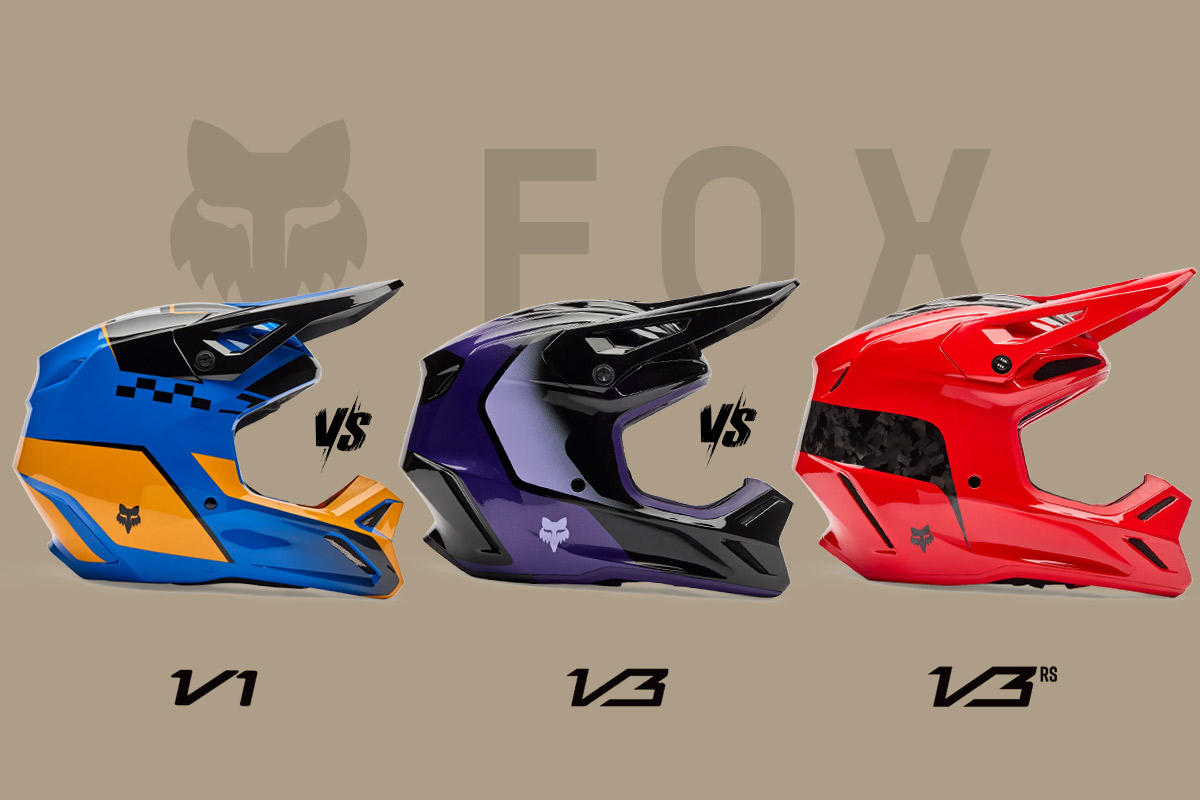
From €200 for a V1 to more than €630 for a V3 RS, the Fox helmet range makes the big difference. Since the switch to ECE 22.06 for motorcycle helmets and the deletion of the Fox V2 model, the benchmarks have changed: for example, weight gain with a carbon shell is no longer measured on the scale, but in the management of shocks to the brain, heat dissipation and resistance of materials. Fox V1, V3 or V3 RS: Beyond marketing arguments and commercial blabla, let's break down what really separates these three off-road helmets once the bike is started.
Comparison table of the Fox motorcycle helmet range (ECE 22.06)
| Characteristics | Fox V1 Headset | Fox V3 Headset | Fox V3 RS Headset |
|---|---|---|---|
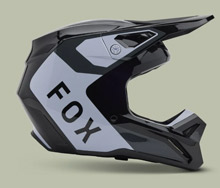 |
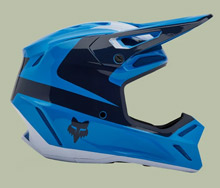 |
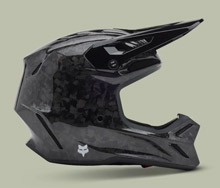 |
|
| Use | Beginner, leisure, quiet hike | Sporty hiking, enduro, league | Elite competition, demanding weather |
| Catalogue price | €199.00 to €239.99 | 439,99 € to 469,00 € | €599.00 to €649.99 |
| Cap material | Polycarbonate & ABS injected | Composite glass fibre | Carbon Fiber 4K |
| Verified weight (Size L) | 1 340 g (± 50 g) | 1 350 g (± 50 g) | 1 350 g (± 50 g) |
| MIPS system | Mips® Classic (yellow membrane) |
Mips® Classic (on multi-density EPS) |
Mips® Integra Split (double EPS cap without membrane) |
| Shock cushioning structure | Standard EPS (5 sizes) | MDEPS ™ multi-density (wide energy dispersion) |
MDEPS ™ bi-calotte (double movable cap) |
| Rescue extraction (cheek pads & Eject) |
No Classic disassembly |
Yes Emergency withdrawal + Eject |
Yes Emergency withdrawal + Eject |
| Jugular closure | Steel | Titanium | Carbon |
| Cheek foams provided | 1 fixed thickness (30 mm) |
1 fixed thickness (33 mm) |
3 thicknesses delivered (28, 31, 33 mm) |
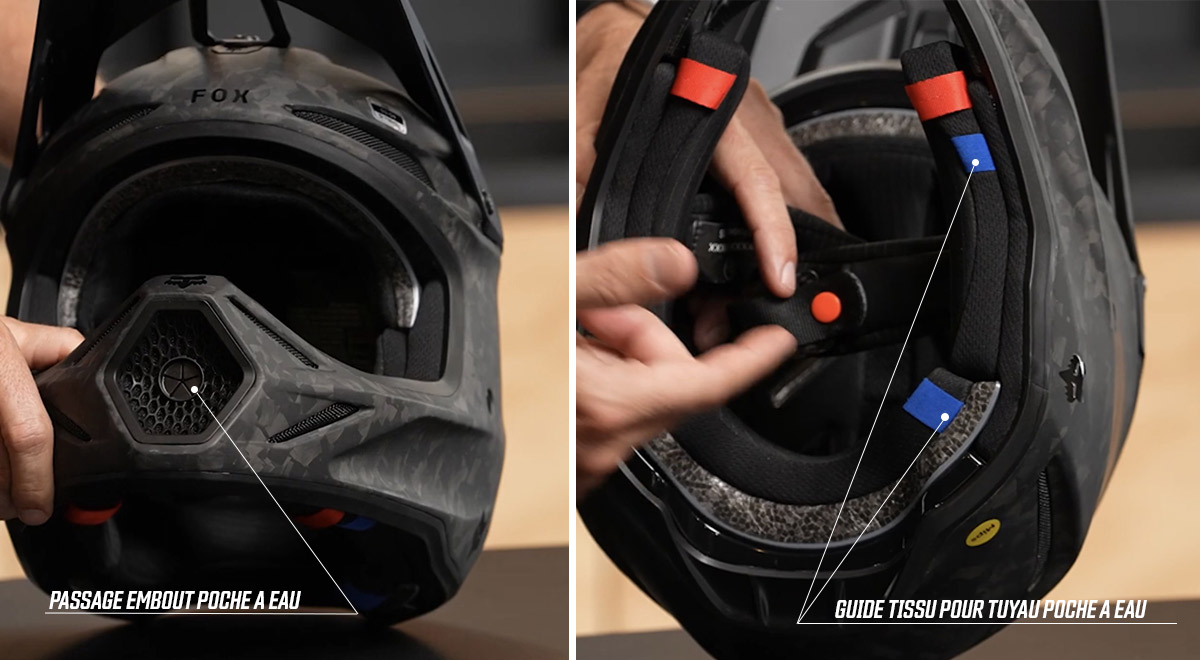
| Pre-equipped Hydration Pipe Passage | No | Yes | Yes |
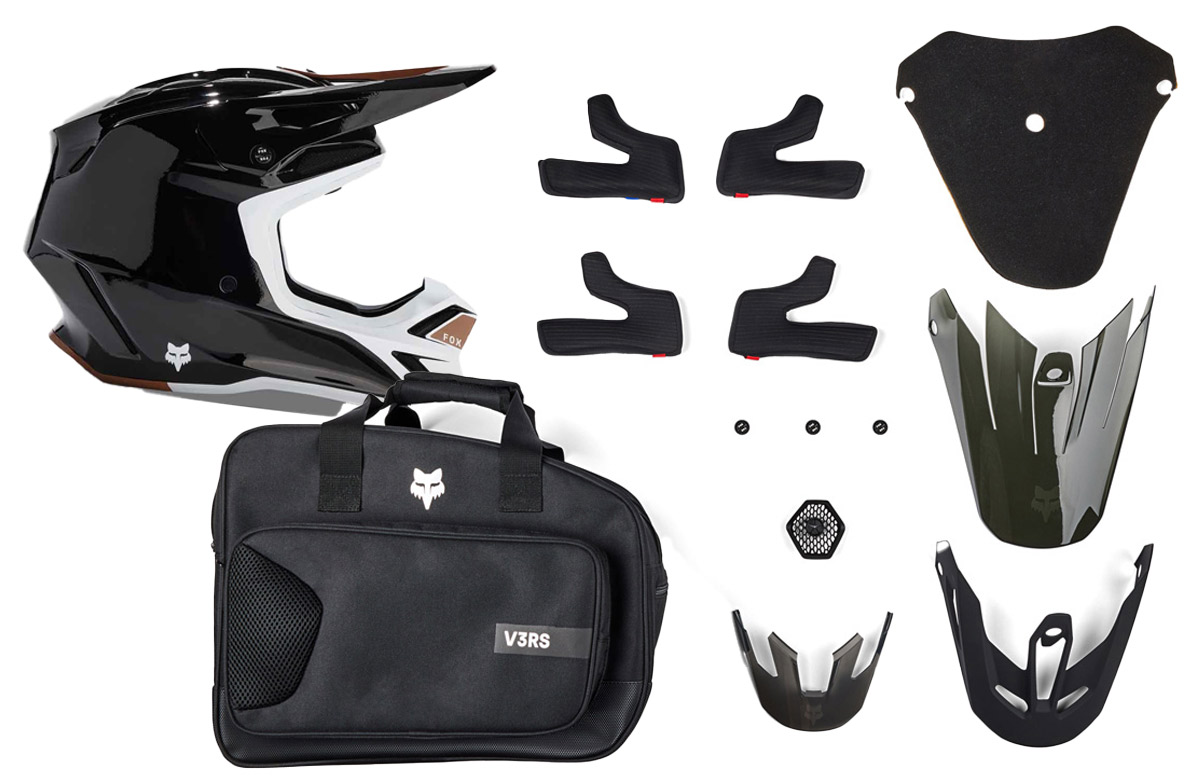
| Accessories in the box | Simple Textile Bag | Visor extender, bag | 2ᵉ visor, visor extender, anti-mud visor, luxury bag |
What happens to the Fox V2 headset?
Historical pillar of the Fox off-road catalog for more than ten years, the Fox V2 has not been renewed when switching to ECE 22.06. Fox has chosen to streamline its production: the V1 has significantly improved performance (serial Mips safety, 4 hull sizes), while the V3 has taken over the baton of the composite fibreglass cap. If you are looking to replace your old V2, the economical and safe alternative is called V1, while the technical leap to the V3 will offer you a much higher level of finish and structural strength.
1. Fox V1 headphones: the best entry-level off-road helmet?
The Fox V1 Headset is the gateway to the brand’s off-road range. Long confined to the status of basic introductory helmet, it has achieved a remarkable technical and safety milestone with its ECE 22.06 approval.
- Impact security and democratised Mips: serial system integration Mips® (low-friction yellow inner membrane reducing brain damage during rotating shock) on a headset is a major safety argument. Its injected plastic shell (polycarbonate / ABS) is available in 4 sizes to have a helmet perfectly adjusted to its morphology (here, it is not a thick foam that compensates for the differences in size as too often in the competition, but the actual volume of the shell, which guarantees better absorption and more safety in the event of a shock), combined with 5 sizes of EPS for a serious morphological setting.
- Comfort and field of vision: With its 7 air intakes and wide field of view, it welcomes without forcing all the modern masks on the market. The adjustable visor has detachable side screws designed to jump when falling to limit cervical twists.
- Its technical limitations: when faced with a large crash, the injected plastic shell deforms less well than a composite and transmits a drier shock wave. The inner foams are removable for washing but do not have an emergency extraction system for relief, nor compatibility with medical ejection cushions. Finally, ventilation remains modest in technical pierriers by high heat.
- Ideal profile: the beginner in motocross, the occasional hiker or the leisure rider who seeks a neat look and a true certified protection of great brand without exceeding the bar of 200 to 240 €.
A user’s return to the field:
‘ It has been my training helmet for over two years and it ages remarkably well, even in the face of regular moss washing. On the other hand, the cheek pads tighten a lot at the beginning: it must be accepted to be well compressed during a few hours of rolling before the textile is made at the jaw. In the middle of winter, the chin strap allows a lot of fresh air to pass through, but for the price, the quality of the workmanship is at the rendezvous. »
2. Fox V3 headphones: the qualitative leap of composite fiber to roll hard
Positioned at the heart of the offer, the Fox V3 Headset radically changes the mechanical register. We leave the world of injected plastic to enter racing design, designed to take large repeated impacts and dissipate kinetic energy much more efficiently.
- Structural absorption MDEPS™ and composite fibre: the Cap Fiberglass Composite offers exemplary rigidity against stone punctures and superior mechanical tolerance during large crashes. She works in symbiosis with the calotin MDEPS ™ (Multi-density EPS), the internal structure of which disperses the shock energy over a much wider surface instead of concentrating it on an area of the skull.
- The work of MIPS on noble hulls: The V3 uses the classic Mips® membrane, but it works on a composite basis and a multi-density calotin. Clearly: the violence of direct shock is already significantly suppressed even before the brain undergoes rotational acceleration.
- Medical safety for emergency services: the V3 incorporates Quick extraction tabs for cheek pads (allowing first-aiders to remove side foams from below without pulling on the neck of a ground pilot – a gesture reserved for trained first-aiders: never remove the helmet of a ground-injured pilot while waiting for rescue) and direct compatibility with the inflatable system Eject.
- Pro finishes and longevity: the closure uses a double D loop in titanium, the 3-position detachable visor is designed to release cleanly on impact, and the inner fabric foams Ionic+® incorporate an antimicrobial treatment that prevents the helmet from feeling perspiration after a few months of rolling.
- The hiking equipment bonus: for lovers of long outlets, the chin guard incorporates an internal passage duct for hydration pipe (mouthpiece provided). It is a real comfort to drink without letting go of the controls, even if the purchase of a V3 is justified above all by its level of mechanical absorption.
- Its limits: as on V1, Fox provides only one thickness of original cheek foams. If you have a square face or strong cheeks, it will have to be patiently rode on several outings.
- Ideal profile: the regular endurist, crossing enthusiast or league pilot who follows the full driving days and who requires the structural safety of a composite hull without paying the price of a carbon model.
A user’s return to the field:
‘ The difference in rigidity and finish with the entry-level is felt as soon as it is taken in hand. On the head, the helmet is perfectly balanced and does not weigh on the neck after 4 hours of intensive driving. The fibre shell inspires confidence in stone splashes, and the trim really breathes better without keeping the smell of moisture. A real racing helmet, very solid. »
3. Fox V3 RS headphones: the Technology Showcase and the Mips® Integra Split
Worn by leading drivers in US Supercross and at the MXGP World Championships, the Fox V3 RS Headset (Race Spec) represents the world’s most advanced cranial protection and materials engineering brand.
- The technological breakthrough of the Mips® Integra Split: The V3 RS abandons the traditional yellow plastic membrane. The rotary sliding system is directly integrated into the helmet architecture in the form of two separate and nested EPS caps, connected by shear elastomers. This process eliminates any parasitic friction against the skull, does not block any airflow and manages impacts differentially (a soft cap for low-speed shocks, a dense cap for violent crashes).
- 4K carbon cap and complete passive safety: the Integral Hull Carbon Fiber 4K provides exceptional resistance to penetration and deformation in the event of severe shock. This obviously includes the emergency removal of the cheek pads, compatibility with the Eject medical system and finally a carbon fibre double D loop.
- Stone Cold® thermal control: the interior uses an exclusive fabric incorporating crushed jade dust to dissipate body heat through continuous contact. Combined with 4 large air extractors cut on the top of the cap, the cooling of the skull is instantaneous as soon as the bike accelerates.
- The exclusive comfort feature in the carton: The V3 RS is the only model in the range that comes with three complete sets of cheek foams of different thicknesses (28, 31 and 33 mm on size L). This is the guarantee of a tailor-made morphological adjustment without going back to the cash register.
- Its limits: at almost €630, the limit of this helmet is its catalogue price, but it is also the price of state-of-the-art security for its head and brain. It should be noted that the original pack is plethoric: luxury transport bag, 3 sets of cheek foams, complete spare visor, anti-sun visor extension, visor and anti-mud foam, spare screws and chin grille with passage for hydration pipe tip.
- Ideal profile: the committed competitor, the sand pilot or the demanding hard-driver who drives hard in all weathers and who demands the most advanced safety on the market.
A user’s return to the field:
‘ The ventilation is simply bluffing, the air circulates continuously on the skull even at moderate speed. The apparent 4K carbon is beautiful. On the size side, fortunately Fox provides several thicknesses of pads in the box: I had to mount the finest foams directly to release my jaws. Only downside: on fast connections, wind noise in the upper slopes is very present. »
Direct comparison: Fox V1 vs Fox V3 headphones, which one to choose?
For many practitioners, the main arbitrage is between the V1 (approximately €200) and the V3 (approximately €469). The difference of more than €200 is significant, but it meets completely different technical requirements on the motorcycle:
- Mechanical behaviour at impact: V1 absorbs shocks via a standard injected plastic shell. The V3 absorbs and disperse kinetic energy via a cap in composite fiberglass and multi-density EPS damper (MDEPS ™), significantly stronger during high-speed violent impacts.
- Quality of rotational work (MIPS): if the classic Mips system equips both models, it works on the V3 under a composite hull that already cashes and dissipates the bulk of the shock wave before it reaches the internal heat sinker.
- Emergency medical security: V3 gives rescuers the possibility to extract the cheek pads from the bottom without coercing the cervical spine or to use the Eject medical system, which the V1 cap does not allow.
- Sustainability and ageing: fiberglass ages significantly better than polycarbonate in the face of climatic aggressions (UV, intense cold) and repeated rock impacts.
- Practical arbitration: If you ride on Sundays or if your budget is limited, the V1 already offers the Mips at the best price on the market. But as soon as you start to ride regularly, increase the pace in the undergrowth or align with league races, the extra cost of the V3 is largely profitable by its structural safety, breathable Ionic+® foams and overall longevity.
Direct comparison: Fox V3 vs Fox V3 RS headset, fiber or carbon?
Between the V3 (fibreglass, ~€450) and the V3 RS (carbon 4K, ~€630), the gap fluctuates between €160 and €180. Since the weight on the scale is the same (1 350 g in both cases), what justifies switching to the RS model?
- Classic Mips vs Mips Integra Split: this is the fundamental mechanical difference. The V3 uses a yellow plastic membrane interspersed under the foams. The V3 RS integrates the system into its structure with two nested EPS caps. Result: zero plastic sensation on the skull, no parasitic noise and differential shock management (slowness in pierriers or pure speed on circuit).
- Ventilation and thermal regulation: the V3 RS breathes significantly stronger than the V3 thanks to its 4 massive air extractors on the top of the cap and its Stone Cold® interior fabric (enriched with jade powder). If you drive in the summer by 30 °C or on sand/classic endurance races, the gain in thermal comfort is indisputable.
- The contents of the carton which erases the price difference: the V3 RS is not only sold more expensive, it comes with a real racing endowment. On its own, the part kit provided (a complete spare 2 ᵉ visor, 3 sets of cheek foams to adjust its cutting edge to the millimetre, the visor extension, the anti-mud swab and the luxury carrying bag) represents more than €150 of accessories if you had to buy them separately on a standard V3.
- Pilot arbitration: for 90 % regular endurists and hikers, the Fox V3 Fiber offers the perfect ratio between mechanical strength, comfort and budget. On the other hand, for the committed competitor who drives hard all year round, who is looking for the best brain protection without a plastic membrane and who needs a complete parts pack as soon as they are unpacked, the Fox V3 RS fully justifies its absolute reference status.
The technical point: Why Carbon Doesn't (More) Gain Weight with ECE 22.06
The first reflex of a buyer who compares an injected plastic helmet at €200 and a 4K carbon model at €630 is to look for a massive gain on the scale. However, the technical sheet is formal: in size L, the three helmets have exactly the same average weight (1 340 to 1 350 g).
Why doesn't the carbon in the V3 RS weigh 200 grams less than the V1?
The answer comes from the impact tests imposed by the standard ECE 22.06. Random impact points, oblique shocks and increased test speeds now require much higher cap thicknesses and EPS foam densities than under the old standard 22.05.
On the V3 RS, carbon fibre is no longer used to lower the helmet below the kilo mark as it was ten years ago: it allows you to embark the Mips Integra Split Mobile Dual Cap Complex Architecture, rapid extraction medical devices, structural reinforcements and massive ventilation ducts without burdening the whole compared to a basic injected cap. The added value of a V3 or V3 RS is therefore not read on a kitchen scale, but in its ability to dissipate violent brain shocks, to facilitate rescue work in the event of an accident, to ventilate the skull and to age without flinching.
Fox motocross or enduro helmet: which model should be preferred according to its practice?
The physical constraints between a 25-minute motocross race and a 6-hour enduro day have nothing in common:
- For pure motocross: the Fox V1 (for the novice pilot/training) or the Fox V3 RS (for the competitor) refer. In a closed circuit, the average speed is high, the continuous water supply is secondary, and structural rigidity and high-speed performance are the main concerns. The V3 RS provides an unparalleled airflow so as not to overheat behind the starting grid.
- For enduro and technical hikes: the Fox V3 is the king's choice. The management of perspiration thanks to the Ionic+® foams, the medical safety of the emergency drawers, its protective fibre shell and its passage of water pipe through the chin cover respond point by point to the galleys of the undergrowth and isolated crossings.
Compatibility with off-road masks
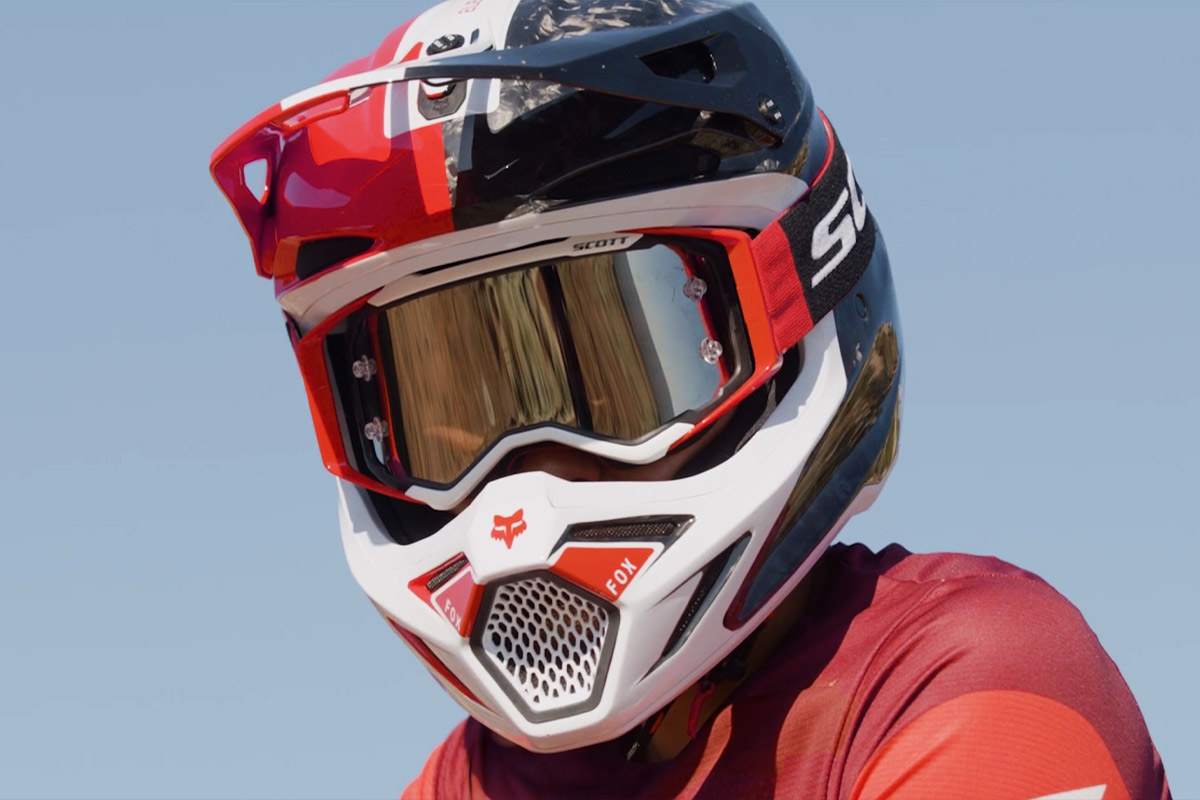
Good news for your current equipment: The entire Fox ECE 22.06 range has a very open facial bay (eyeport in English). That you ride with a mask big screen like the Fox View, on Scott Prospect or 100% Armega, integration is done without forcing on the facial foam and without taking off the helmet from the forehead.
Size and morphology: attention to tight cheeks
If there is one finding shared by almost all Fox-equipped pilots, it is this: the helmets cut very close to the face, with a very firm support at the cheeks.
The original side foams are large and very dense (30 mm on the V1, 33 mm on the V3 in size L). It takes 4 to 5 exits for them to settle and follow the shape of the face. If your head circumference is between two sizes (e.g. 58.5 or 59 cm, at the border between M and L):
- On V1 and V3: go on the upper waist to avoid headaches and painful compression points on the jaw.
- On the V3 RS: you can stay on your usual size since the three sets of cheek pads provided in the carton allow to pass on a thinner thickness (28 mm) to release the face from the first roll.
The Freenduro verdict
- The choice of budget/leisure: Fox V1. At less than 240 € (and frequently delivered around 180 € at retailers), it offers Mips security, homologation 22.06 and a racy line. It is the smart helmet to start without taking risks.
- The choice of wording: Fox V3. It is the ideal weapon for enduro and regular cross-country. Its composite fibre cap, MDEPS ™ caliper, emergency rescue extraction system, technical foams and hydration integration in the chin band make it the best ally to ride hard and for a long time.
- Uncompromising choice: Fox V3 RS. Aimed at pilots who do not deal with anything. Its double Mips Integra Split cap without plastic membrane, its 4K carbon shell, its medical extraction safety and its complete supply of original accessories (including the 3 cheek sizes) make it one of the most advanced competition helmets on the market.
The budget trick: Why watch the "Solid" versions?
If you are looking to lower the score without making any concessions on your safety, look at the finishes side Solid (the plain colours: matte black, white or sand). Under the paint, these models are rigorously identical versions with complex decorations or replicas of pilots: same cap, same Mips safety level, same foams and same ECE 22.06 approval.
The lack of graphics allows manufacturers to lower the catalogue price, and resellers often apply much more aggressive discounts on these unified models. It is the smartest option to access V3 fibre or V3 RS carbon at the best price, while keeping a go-to headset that is easy to match with any outfit.





Comments
Leave a comment