Comparison of enduro vests: Zandona Netcube Jacket vs Leatt 3DF AirFit Hybrid
In enduro, there is a universal rule: Falls, projections, brambles and branches don't give you a gift, no matter your track record or level. Whether you are a fierce competitor, a hard enduro rider or a simple amateur (or beginner) hiker, , the ground is also hard for everyone. Protecting your upper body is therefore essential, and you really shouldn't mess with it.
The problem is that choose the right enduro protective vest It is often a headache. We are all looking for the perfect compromise: a very protective, lightweight and comfortable vest, which does not turn into a pressure cooker after five minutes of effort, and which avoids feeling engulfed like a Robocop with a technical first climb.
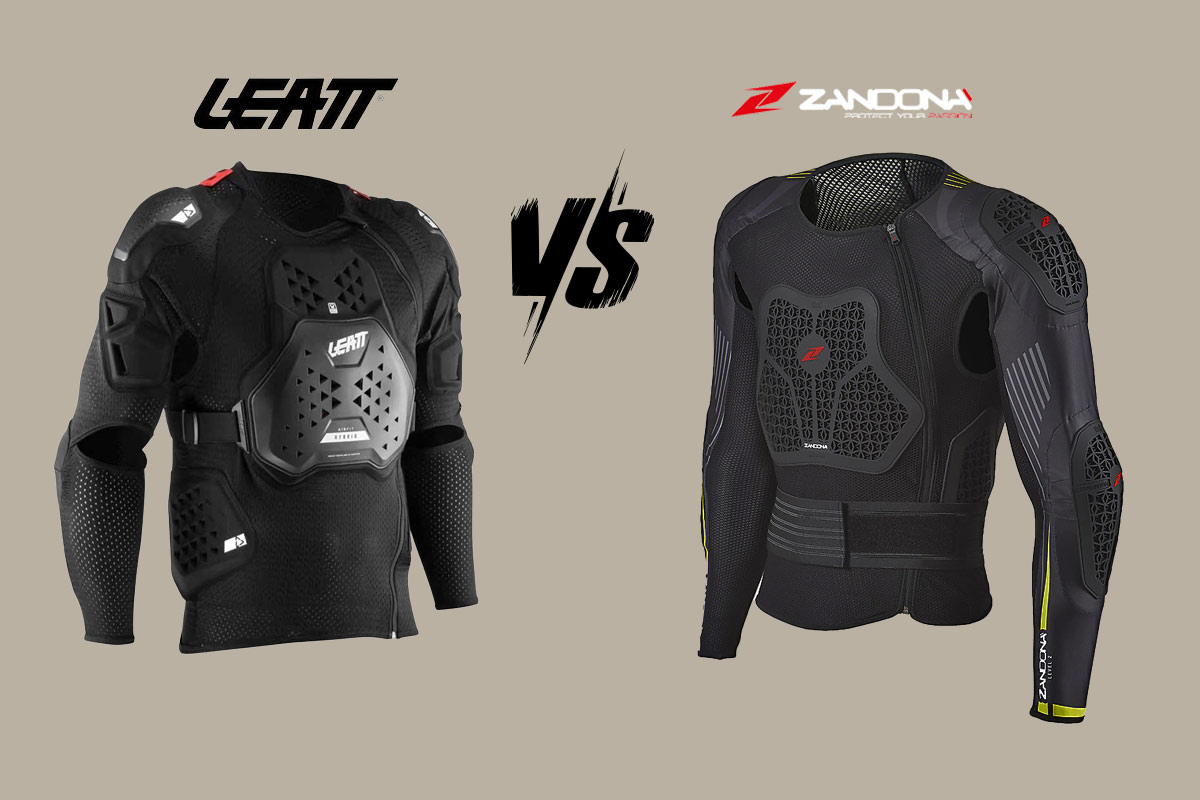
Face to face: Zandonà Netcube Jacket VS Leatt 3DF AirFit Hybrid
In the market for high-end motorcycle protective vests, two models dominate the debates today to secure the back and bust. On the one hand, Italian Zandonà with his Netcube Jacket (and its clever size system X6-X7-X8). On the other, the South African giant Leatt, recognized specialist off-road protection, and sound Body Protector 3DF AirFit Hybrid.
But in the face of the well-established sales arguments of these two leaders, how to know which one is really the most effective once on the bike? To decide, we put aside the blabla of marketing catalogs. We turned these vests around to dissect them: true shock absorption levels, weight, heat management and morphological adjustment. Is the almost artisanal know-how of the Italian Zandonà able to beat the technology of the giant Leatt vest? Here's our full verdict, from the occasional hiker to the league pilot.
1. Level of protection: EC absorption match against anti-perforation
It is here that the duel is the most crisp, as the two marks do not have the same approach at all in the event of a fall.
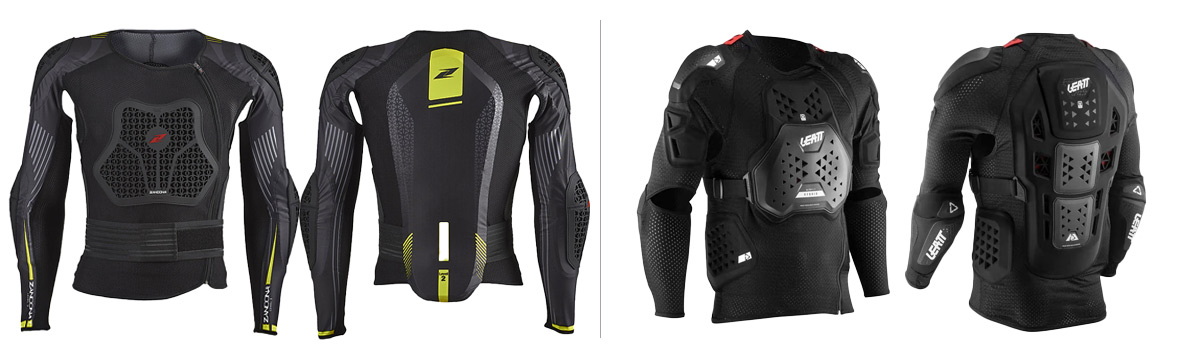
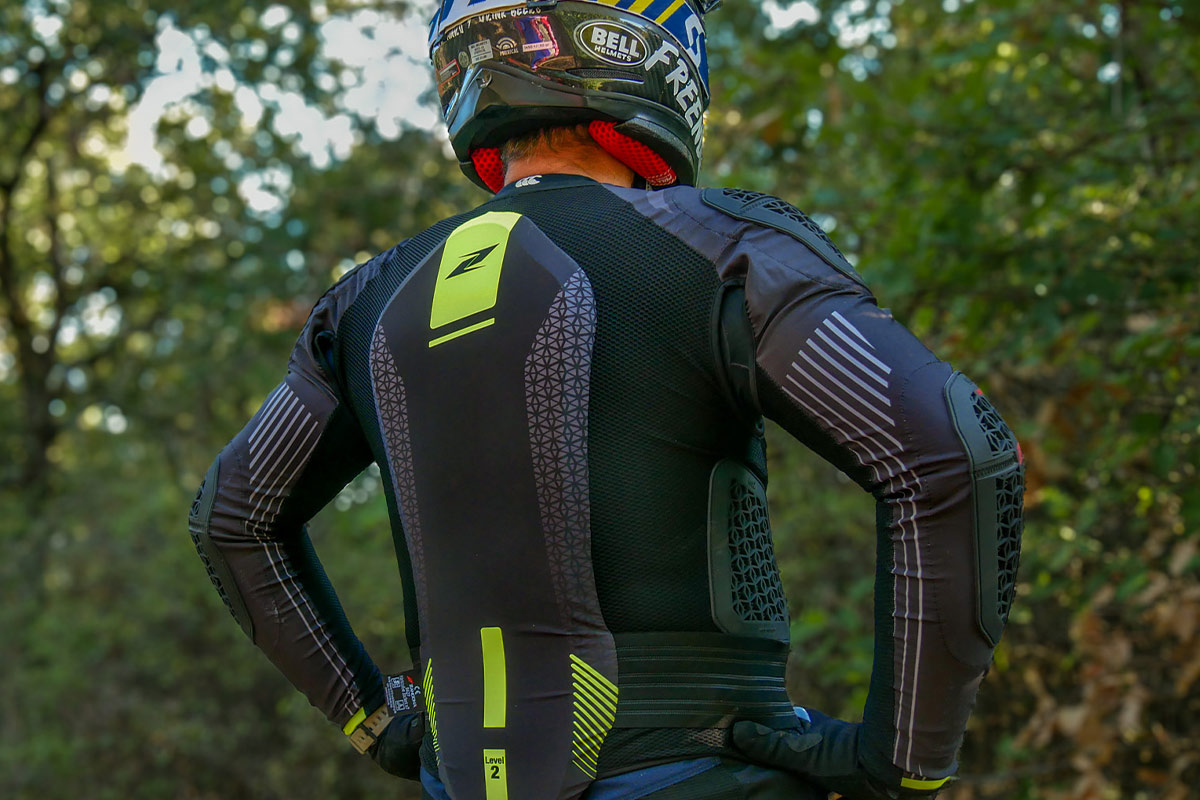
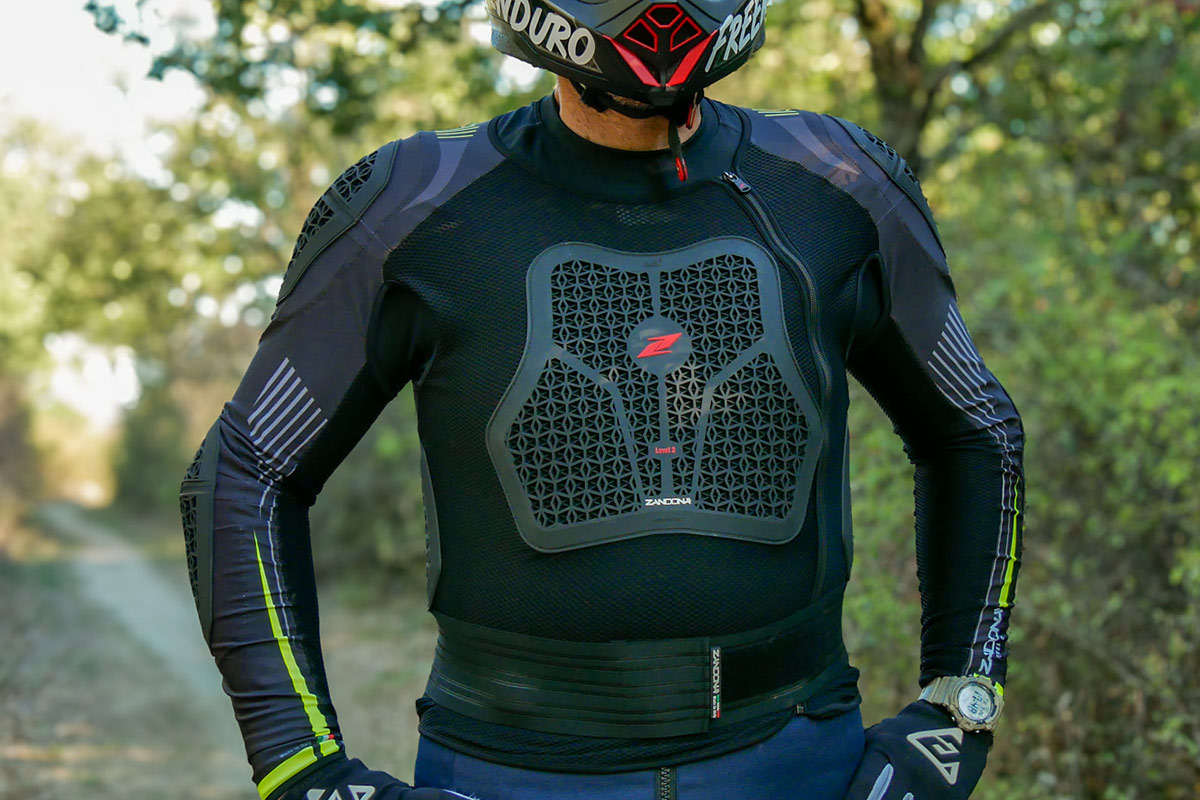
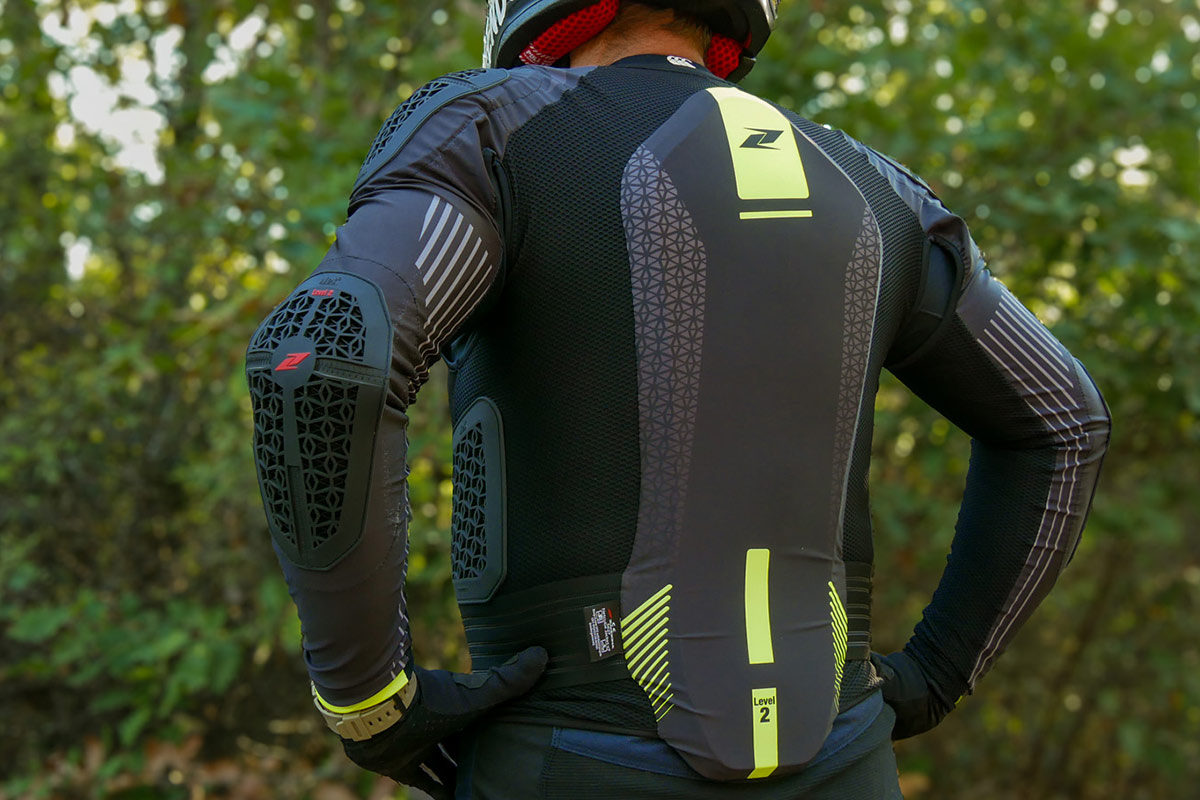
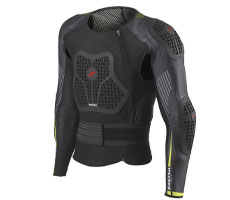
At Zandonà, the philosophy is strict and does not compromise with European standards. The Netcube Jacket strikes a big blow by displaying an EC approval of Level 2 on absolutely ALL its elements : dorsal (EN 1621-2), pectoral (EN 1621-3), but especially shoulders and elbows (EN 1621-1). Faced with the anguish of the perforation (the pointed branch taken from the front or the protruding stone on the back), Zandonà has a formidable parade: a double layer design. Behind the external structure ‘Net3’ (this famous honeycombed nitrile rubber grille visible from the outside), the mark slipped a thick plate of very dense foam, clad against the body. This combo absorbs the heavy shock wave (Level 2) while providing a real background bulwark against sharp objects.
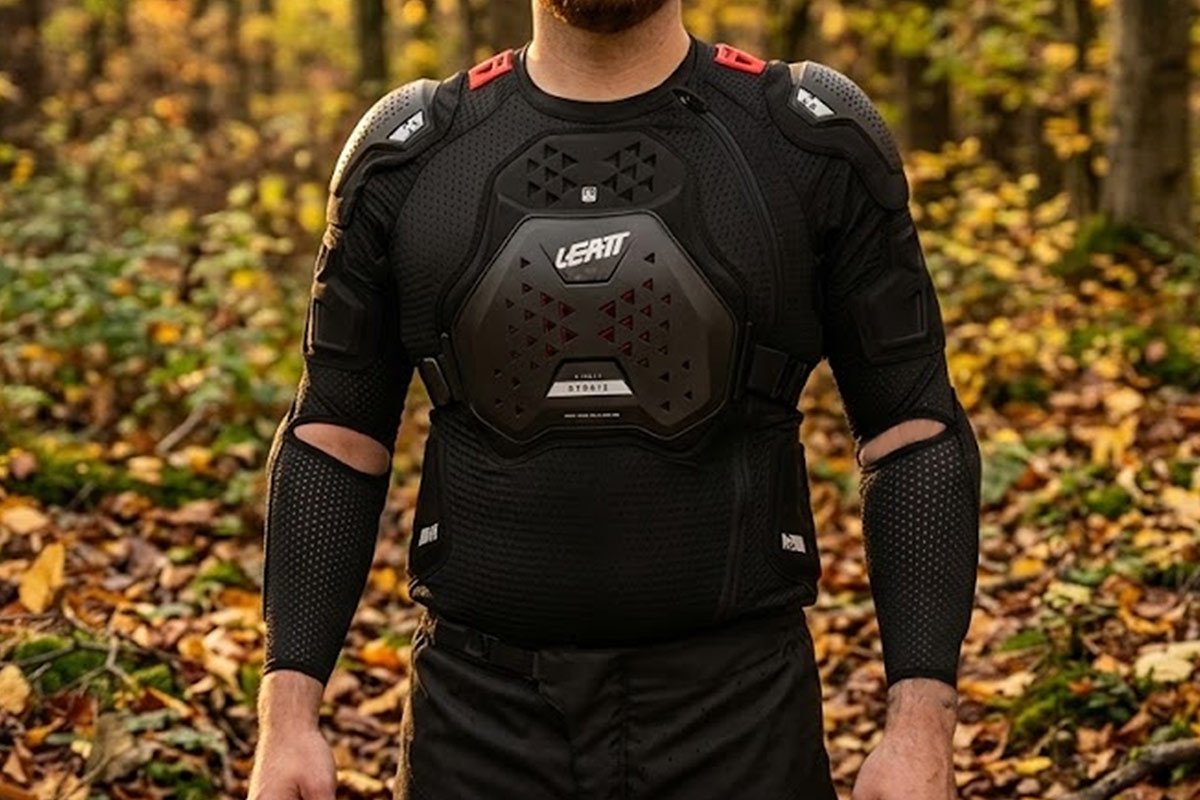
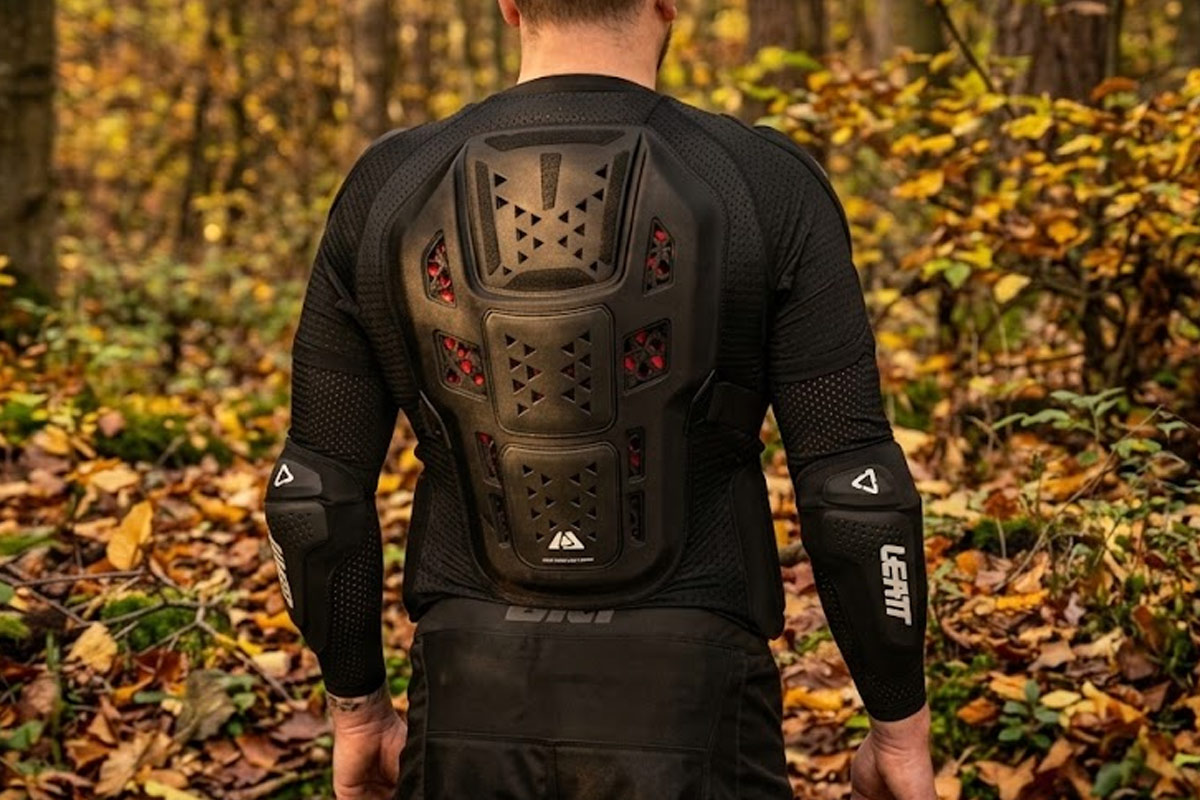
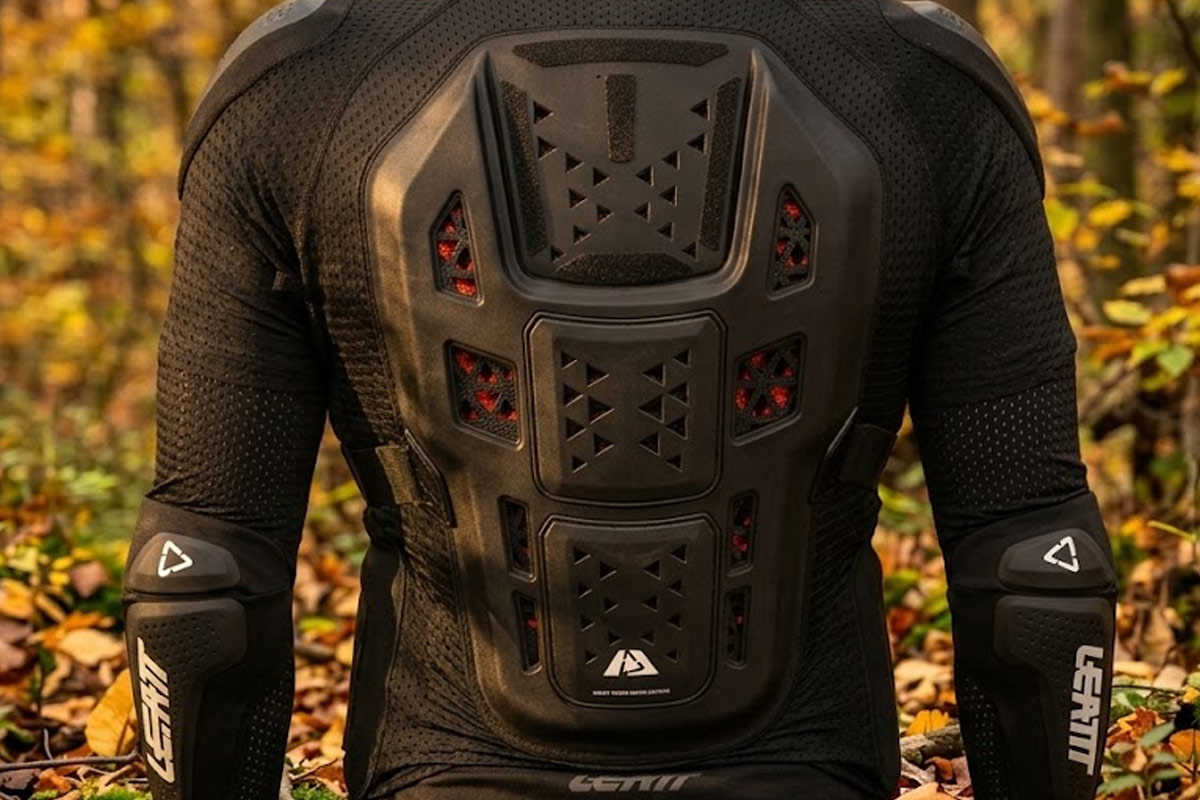
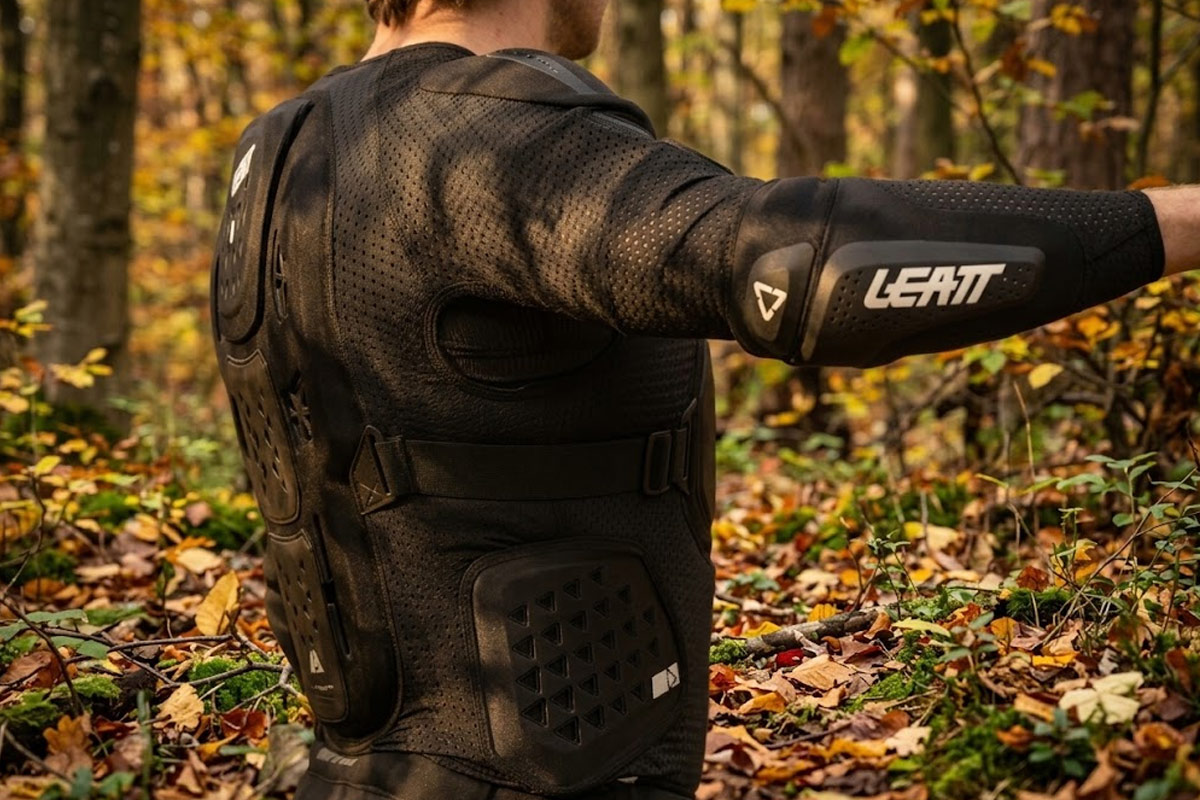
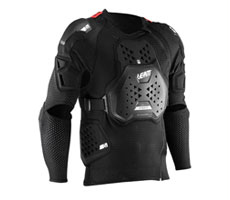
Opposite, the Leatt AirFit Hybrid Vest proposes a mixed construction. It superimposes the famous 3DF intelligent soft foam with hard plastic deflectors (hardshell) on top, positioned on the torso and back. If the torso and back validate a Level 2 protection standard and the plastic shells make an excellent shield against puncture or stone splashes, elbows and shoulders are content with Level 1. A strong point, however, for the South African: If both models are well equipped with complementary foam protections on the sides, the Leatt stands out by integrating small pads on the front of the biceps, an area exposed to branch strikes and projections that is not covered on the Zandonà.
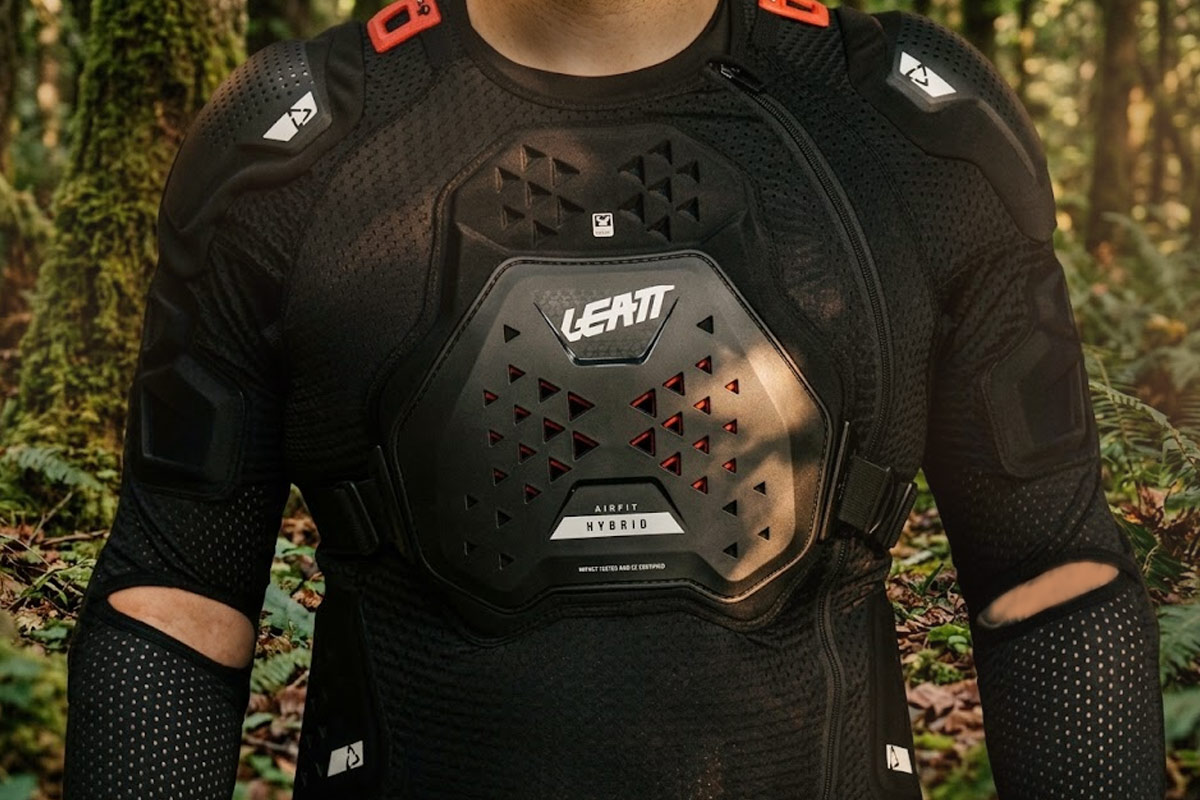
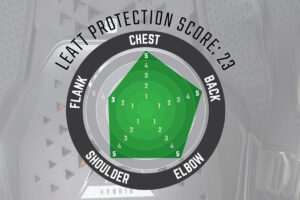 But this is where you have to look to differentiate marketing discourse from reality. When you look at Leatt’s infographic opposite, their radar proudly gives itself the maximum score of 5/5 on almost all areas. However, the shoulder protectors (Shoulder) and elbow protectors (Elbow) are not certified that Level 1 according to the CE standard, while the torso (Chest) and back (Back) reach Level 2. This is not dramatic in itself, but this graph clearly lacks rigour vis-à-vis the requirements of the accreditation laboratory. For Italians in Zandonà, no marketing grade from 1 to 5: the mark merely certifies all its elements (back, torso, elbows and shoulders) as Level 2. Net benefit to Zandonà on the pure absorption capacity of joint shocks.
2. Weight and ventilation
Side thermal comfort and weight, the two vests behave differently with effort.
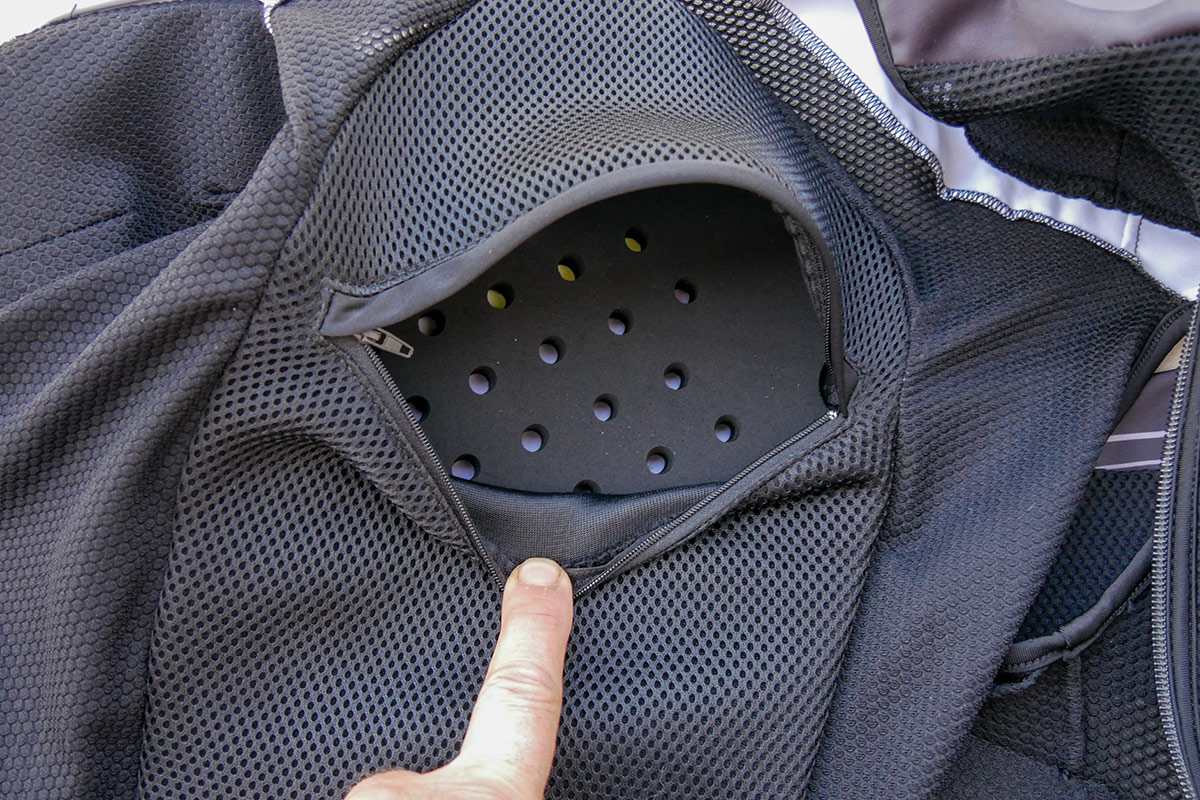
From the outside, the very openwork look of the Net3 grid of the Zandonà suggests that we will ride bare chest. In fact, if we open the zip of the backbone, we can see that the dense internal foam plate necessarily slows down the air flow a little. Fortunately, Zandonà has pierced large ventilation holes of large diameter that do the job very well in dynamics. The vest remains relatively light (around 1,200 g) and the elastic mesh fabric base perfectly evacuates body heat.
The Leatt 3DF AirFit Hybrid is logically heavier (weighed to more than 1,630 g) because of its additional hard shells. The chassis uses MoistureCool fabric who excels at evacuating perspiration by capillarity (like a real technical underwear). The major disadvantage in enduro as soon as it is hot is that the stacking ‘fabric + 3DF foams + plastic shells’ on the torso and back acts as a radiator and inevitably retains more heat in the climbers on the switch.
3. Comfort and morphological adjustment
Leatt undoubtedly remains the king of the ‘second skin’ effect. Their zipped compression shirt, with cut-outs in the armpits and elbows, perfectly fits the upper body and does not hinder movement. The 3DF foam softens with body heat in a few minutes: We quickly forget that we wear armor. The catch is still the rigid hulls that add extra thickness and stiffen the entire vest a little to the detriment of overall comfort. For the adjustment to each driver morphology, we stay on basic with a standardised size grid: S/M, L/XL, or XXL.
The Zandonà vest offers a unique orthopedic approach: double morphological selection. When buying, you first choose your classic waist circumference (from XXS to XXXL). then you select the length of the dorsal depending on your total height (X6 for drivers from 158 to 167 cm, X7 for 168 to 177 cm, X8 for 178 to 187 cm). The biggest problem with an enduro protective vest is a dorsal that is too long and slaps in the pants and goes up in the neck, or it is too short and leaves the lumbars exposed. At Zandonà, the adjustment to each morphology is more precise (the more protection is adapted to your size, the more effective it will be to protect you). Add fully flexible protective plates with a slip-on zip staggered to the side (which makes it possible to have a pectoral plate of a single block perfectly protecting the sternum) and a real lumbar support belt: The Zandonà clearly wins this match of comfort and morphological adjustment.
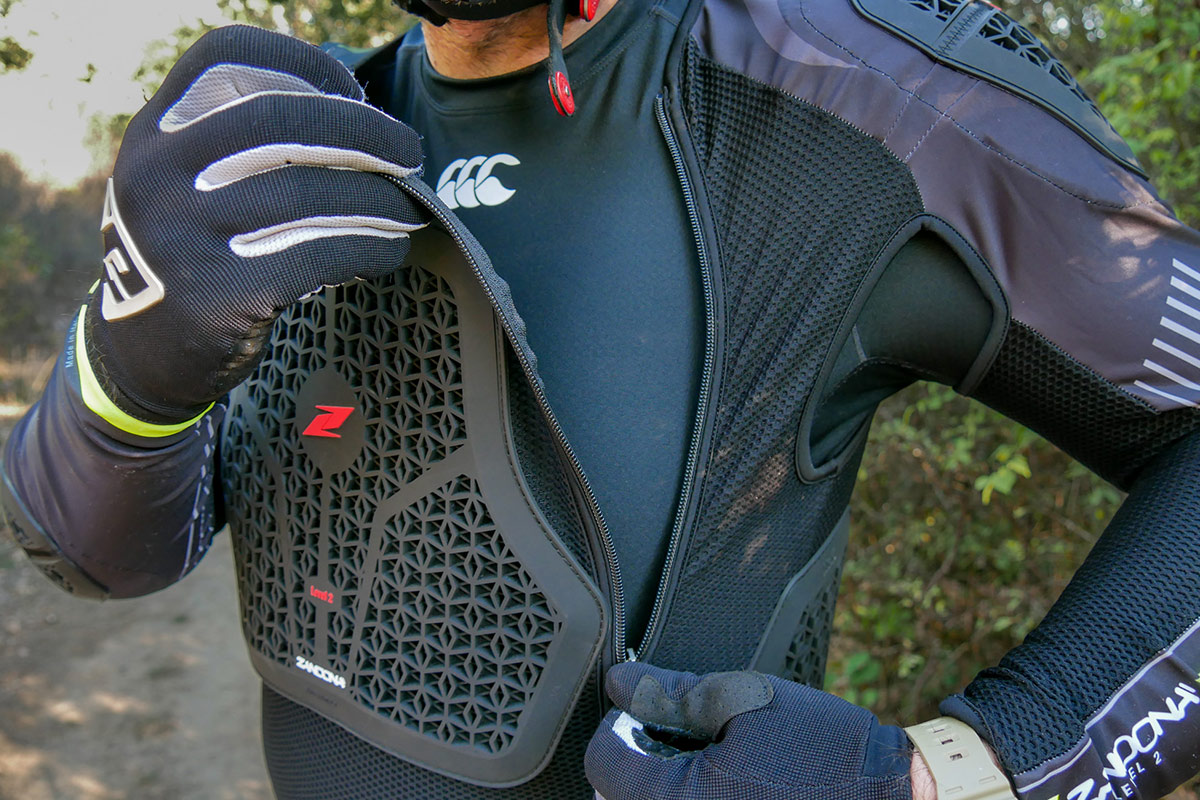
💡 The Freenduro comfort trick on the Zandonà:
If, like many endurists, you hate having a big over-thickness at the elbows (which pulls on the sleeves of the jersey and compresses the forearm until causing the armache), the Zandonà hides a very useful option. You can open the inner pocket of the elbow pads and remove the inner dense foam layer, to keep only the Net3 honeycombed outer shell. Of course, you lose Level 2 certification on this joint by doing this, but the gain in comfort and freedom of movement is immediate! (Please note: never hack the foams of the back or torso).
4. Rates: The Thinking Gap
The question of the budget comes to the end of this debate. The Zandonà Netcube Jacket is displayed at 289,90 € (public price recommended). This is a very aggressive price placement for 100 pieces of equipment. % Certified Level 2 and manufactured in Europe. For its part, the Leatt Body Protector 3DF AirFit Hybrid takes off at €369.95. A gap of €80 difficult to justify when we know that the joints of the South African model validate only Level 1 shock absorption.
The Freenduro verdict: Zandonà or Leatt?
The Leatt 3DF AirFit Hybrid Vest is a excellent product, formidable comfort and very safe against shocks during falls or large projections of stones on the torso thanks to its hard shells. Its additional protections on the biceps are a real plus in enduro to bet on the encounter with branches. But where it fishes, it is at the level of the approval of the elbows and shoulders (only Level 1). It is also because of its higher weight and rather limited ventilation that it is penalised against the Zandonà.
However, according to our enduro or hard enduro criteria (level of protection, comfort, ventilation and price), the Zandonà Netcube vest is the winner of this duel.
Why? Because in enduro, slips and violent shocks on elbows or shoulders against rocks are commonplace. Have real Level 2 on the elbows, shoulders as well as on the torso and back, combined with tailor-made adjustment of back length (system X6-7-8), with the real lumbar belt, and the possibility of refining the thickness of the elbow pads, supplanting the Leatt, all for €80 less.
Comparative table: Zandonà Netcube Jacket vs Leatt 3DF AirFit Hybrid
| Characteristics | Zandonà Netcube Jacket | Leatt 3DF AirFit Hybrid |
|---|---|---|
 |
 |
|
| Catalogue Tariff (PPC) | 289,90 € | 369,95 € |
| Weight on the scale | ~ 1200 g | ~ 1630 g |
| Absorption technology |
Net3 (nitrile rubber) + perforated foam underneath |
Foam 3DF AirFit |
| Back protection | CE EN 1621-2 Level 2 | CE EN 1621-2 Level 2 |
| Pectoral protection | CE EN 1621-3 Level 2 | CE EN 1621-3 Level 2 |
| Shoulders & Amp; Elbows | CE EN 1621-1 Level 2 | CE EN 1621-1 Level 1 |
| Flank protection | Yes | Yes |
| Protection before biceps | No | Yes |
| Size grid | Tailor-made Size (XXS-XXXL) + Height (X6, X7, X8) |
Standard S/M, L/XL, XXL |
|
Textile base |
Ventilated elastic mesh | Zip Compression Shirt (MoistureCool) |
| Lumbar belt (Keeping the vest in place) |
Yes | No |
| Customization elbows | Removable foam for refining | Fixed guards |
Freenduro global scores: The detailed analysis
Zandonà Netcube Jacket (X6-7-8)
Leatt 3DF AirFit Hybrid
Find the best prices for 2 protective vests
The tables below list the offers of shops that have agreed to integrate Freenduro price comparators. Prices are automatically collected and updated every hour in order to offer you in real time the ranking of the cheapest to the most expensive rate.
🤝 Transparency Freenduro: The links to the shops below are affiliate links. This means that if you buy your vest through our site, the merchant pays us a small commission. It costs you absolutely nothing more on the final price, but it is thanks to this system that we can make Freenduro live, pay for the servers and continue to offer you 100 tests % independent and free. Thank you for your support!
🛡✘ Understanding the EC standards: What is the difference between Level 1 and Level 2?
On the technical data sheets of motorcycle protective vests, manufacturers often highlight the mention EC approved. But be careful: not all approved vests protect in the same way. The European Standard (Series EN 1621) tests the transmitted residual force to the body during a calibrated impact (expressed in kiloNewtons, kN). The lower this figure, the more the protection absorbs the shock wave:
- Dorsal (EN 1621-2) & Pectoral (EN 1621-3): The Level 1 tolerates a transmitted mean force of up to 18 kN. The Level 2 requires not to exceed 9 kN. To put it plainly: a Level 2 backbone halves the violence of the shock transmitted to your spine relative to a Level 1.
- Elbows and shoulders (EN 1621-1): The Level 1 tolerates up to 35 kN transmitted to the joint, while the Level 2 lowers this value to 20 kN maximum. On a direct fall on a rocky ridge, the bone therefore takes almost half the stress with Level 2.
In summary: for committed off-road use, Level 2 provides an essential absorption gain in the face of heavy and blunt shocks.





Comments
Leave a comment